How to Select the Right Colors for Your Workplace

How to Select the Right Colors for Your Workplace

Written by: Daniel Lange

Last Update: 27 February, 2025Read: 5 minutes
Colors are a non-verbal, universal language that speaks volumes. In workplaces, brands carefully choose colors to reflect their identity, making them an integral part of their image. As the Russian painter and art theorist Wassily Kandinsky once said, “Color is a power that directly influences the soul.” This highlights how colors profoundly impact employees' moods, affecting their productivity and overall well-being.

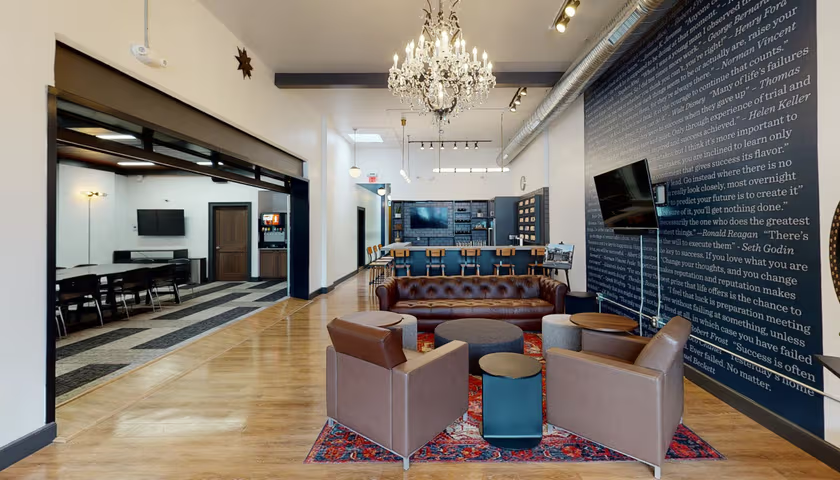
Imagine receiving two job offers. You walk into the first office, where the colors are dull, the theme is dark, and the atmosphere feels heavy—almost suffocating. Now, in the other office, the walls are filled with vibrant colors, inspiring artwork, and motivational quotes, creating an energizing and uplifting environment. Which one would you prefer to work in? This is where color psychology comes into play, exploring how different shades evoke emotions and influence our mental state.

If your office space feels uninspiring, it might be time for a refresh. In this blog, we'll dive into the psychology of colors and how to choose the right ones to create a productive and inviting workplace. Let’s get started!

Understanding the Color Psychology

Color psychology studies how different types of colors impact human behavior and mood. It highlights that colors influence emotional responses in unique ways, and their effects can vary depending on factors such as culture, age, and background. 

Here’s how some colors impact the workplace:
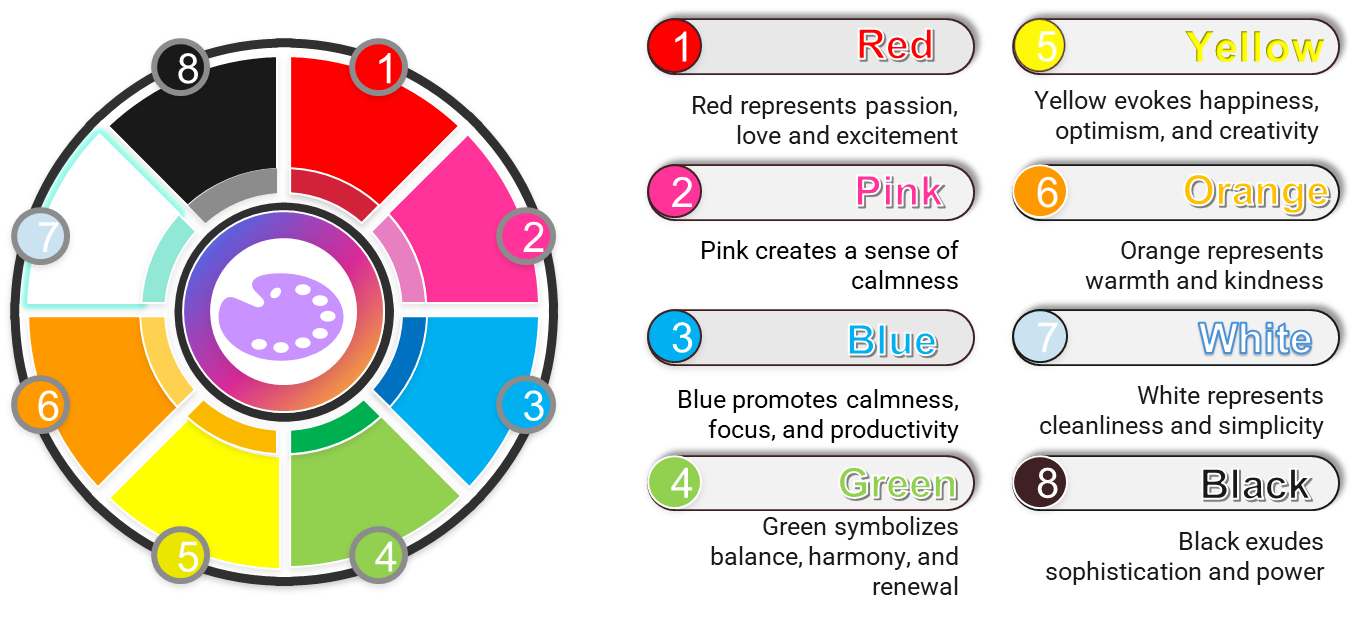
 
Combination of 8 colors and what they portray
 

1. Red – Passion & Love

Red increases energy levels and stimulates excitement. However, too much red can feel overwhelming, so it’s best used as an accent rather than the dominant color.

2. Pink – Soft & Reserved

Pink creates a sense of calmness and is often associated with gentleness and warmth.

3. Blue – Wisdom & Peace

Blue promotes calmness, focus, and productivity. It is ideal for offices where deep thinking and concentration are required. Tech companies and corporate settings often use blue to encourage efficiency.

4. Green – Nature & Growth

Green symbolizes balance, harmony, and renewal. It also reduces eye strain, making it an excellent choice for workspaces with long hours. Green also connects with nature, promoting a sense of well-being.

5. Yellow – Hope & Joy

Yellow evokes happiness, optimism, and creativity. It’s best suited for creative spaces like marketing agencies or design studios, where innovation thrives. However, excessive yellow can be overwhelming.

6. Orange – Warmth & Kindness

Orange encourages enthusiasm and friendliness. It creates a welcoming atmosphere and stimulates collaboration.

7. White – Truth & Simplicity

White represents cleanliness and minimalism but can sometimes feel too sterile or uninspiring. It works well when paired with other colors.

8. Black – Elegance & Authority

Black exudes sophistication, power, and professionalism. However, too much black can feel heavy or cold, so it’s best used in moderation.

Different colors trigger different emotions and reactions. However, it’s essential to consider that this guide is just a general reference—everyone perceives colors differently based on their personal experiences. Color responses are subjective, and there is no universal rule for how people feel about specific shades.

Not only do colors matter, but factors such as color combinations, intensity, lighting, and placement also influence mood and perception.

At this point, you might start thinking about which color combinations are best for your workplace. What colors can influence a positive mood among employees? Which shades should you use to enhance focus and boost productivity?

Don’t worry! We have identified the top six popular workplace color combinations and explained how they impact employees' moods and productivity.
 

Choosing the Right Colors For Your Workplace (A Guide to Productive Hues)

Choosing the right colors for your workplace is essential for creating a positive impression and reflecting your brand identity. Let’s explore the different colors and combinations you can use to enhance your workplace design.
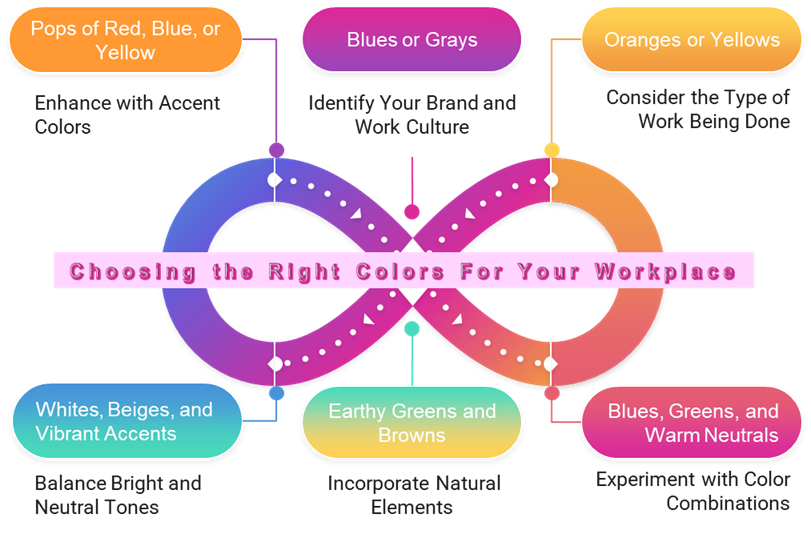


1. Enhance with Accent Colors (Pops of Red, Blue, or Yellow)

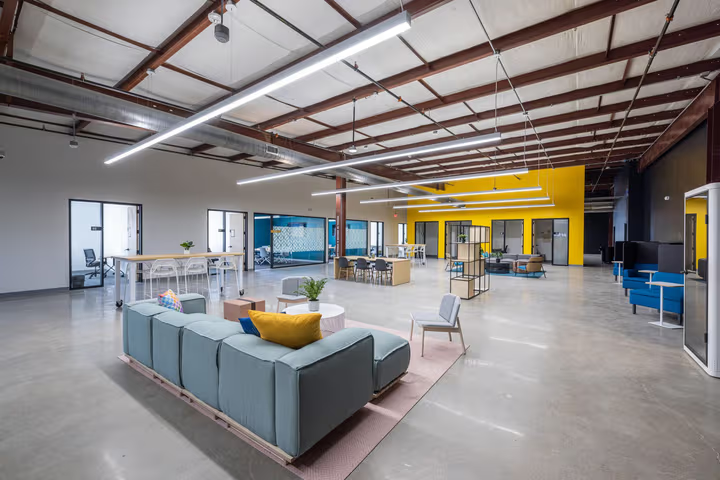
You can use accent colors to add character and personality to a workplace. Accent colors are secondary colors used to highlight and contrast a space without overwhelming it. They complement primary colors and help create visual interest. For example, if your office has neutral walls like white or gray, you can use bold accent colors like blue, yellow, or red in furniture, artwork, or decorative elements to add energy and character to the space.

2. Identify Your Brand and Work Culture (Blues or Grays)

Your office colors should align with your brand identity and company culture. If your company values creativity and innovation, incorporating shades of blue or grays can inspire fresh ideas. For a corporate, professional setting, blues and greys can establish a sense of trust and reliability.

3. Consider the Type of Work Being Done (Oranges or Yellows)

Think about the nature of your work. Blue or green tones can create a calming and productive environment if your employees need to stay focused for long hours. For industries that rely on high energy, like sales or media, incorporating elements of orange or yellow can boost motivation and enthusiasm.

4. Balance Bright and Neutral Tones (Whites, Beiges, and Vibrant Accents)

A balanced approach is key. Too many bright colors can be distracting, while too many neutral tones may feel dull. Consider using neutral colors as a base while adding pops of vibrant colors through furniture, decor, or accent walls.

5. Incorporate Natural Elements (Earthy Greens and Browns)

Pairing colors with natural elements like plants, wooden textures, or soft lighting can enhance the overall ambiance. Greenery adds a splash of color, improves air quality, and reduces stress. For example, placing potted snake plants in workstations or using wooden desks with warm lighting can create a more inviting and calming workspace.

6. Experiment with Color Combinations ( Blues, Greens, and Warm Neutrals)

Try introducing different colors in specific office sections, such as meeting rooms, break areas, or workstations. Use removable wallpapers or digital simulations to visualize the impact before committing to a permanent change. Monitor how employees interact with the new colors—do they feel more focused, relaxed, or motivated? Based on feedback, refine your choices to create an optimal color scheme for your workspace.

Elevate Your Workspace with Modern, Vibrant Designs!

Choosing the right colors for your workplace is more than just an aesthetic decision—it directly impacts productivity, creativity, and employee well-being. A thoughtfully designed workspace with vibrant and attractive tones can make a lasting impression and enhance efficiency.

Understanding color psychology and strategically selecting hues that align with your brand and work culture can help create a more engaging and inspiring work environment.

If your office needs a refresh, consider upgrading to a modern, well-designed workspace that enhances aesthetics and productivity. You can partner with us, Office Hub, as we provide luxurious and thoughtfully designed workspaces. These flexible office spaces reflect vibrant tones, adopt ergonomic seating, and offer customizable color schemes.

Don’t wait any longer, and create an environment that reflects your brand identity now!

Frequently Asked Questions (FAQs)

Colors influence focus, creativity, and energy levels. For example, blue promotes concentration, while green reduces stress, helping employees stay productive.
Warm colors like yellow and orange boost enthusiasm and creativity, while cooler tones like blue and green create a calming, focused environment.
Color psychology suggests that different hues evoke specific emotions—blue enhances trust, red increases urgency, and green promotes balance and relaxation.
Blue and green enhance focus and calmness, while yellow stimulates creativity. A mix of neutral tones with vibrant accents creates a balanced workspace.
Proper lighting enhances color perception—natural light makes colors appear vibrant, while warm or cool artificial lighting can influence mood and energy levels.

Daniel Lange
Daniel Lange
ABOUT THE AUTHOR
Daniel Lange
Daniel Lange is an athletic sales and finance expert who ensures seamless workspace deals. With his excellent analytical and problem-solving skills, you can trust that you’ll receive the best option for your unique workspace needs.

We are the US's No. 1 marketplace for serviced, coworking, and shared office space.

Connect with our local experts for flexible workspace solutions across the US. Get personalized recommendations, arrange tours, and secure the best deals — all at no cost.


Office Hub team memberOffice Hub team memberOffice Hub team memberOffice Hub team member

Talk to our Experts directly

646 741 8226

Latest News

Explore trends, data, and tips shaping United States’s dynamic office market

Google Designs Offices People Actually Want to Come To (and What You Can Learn From It)

Google Designs Offices People Actually Want to Come To (and What You Can Learn From It)

Google offices have always been one of the most recognisable workplaces in the world . The slides, cafés, nap pods, colourful corners, rooft... Read more
Andrew Beck6 July, 2026
4 Successful Startups That Started in Coworking Spaces

4 Successful Startups That Started in Coworking Spaces

Coworking spaces are often treated like a temporary stopgap useful for freelancers or consultants, early-stage founders, remote workers, and... Read more
Angeline Suriaatmaja30 June, 2026
10 Essential Questions to Ask Before Choosing a Coworking Space

10 Essential Questions to Ask Before Choosing a Coworking Space

A coworking space can look perfect during a 20-minute tour. The desks look tidy, the meeting rooms are empty, the WiFi works, and the commun... Read more
Miles Anderson29 June, 2026
Death of the Fixed Desk: And the Future of Office Work

Death of the Fixed Desk: And the Future of Office Work

The fixed desk made sense when office life was predictable. Most people came into the same office, sat in the same spot every day (Sheldon C... Read more
Grant Philipp25 June, 2026
Hybrid Office Models Explained (and Which One Fits Your Team)

Hybrid Office Models Explained (and Which One Fits Your Team)

A few years ago, most businesses could start their office space search with a simple question: how many desks do we need? That is harder now... Read more
Rebecca Philipp24 June, 2026
What Type of Office Space Works Best for Your Industry?

What Type of Office Space Works Best for Your Industry?

Choosing an office used to start with a simple question: how many desks do we need? Hybrid work , especially after the pandemic, has made th... Read more
Rebecca Philipp22 June, 2026
9 Office Space Challenges for Small Businesses in 2026

9 Office Space Challenges for Small Businesses in 2026

Choosing an office space used to begin with a fairly simple calculation and three main questions: how many people are on the team, how many ... Read more
Andrew Beck22 June, 2026
Flexible workspace membership types: which makes sense for your team?

Flexible workspace membership types: which makes sense for your team?

Flexible workspace is not new, but the way businesses use it has changed. What used to sit on the edge of the office market is now part of e... Read more
Daniel Lange17 June, 2026
The Best Coworking Conferences in 2026 for Operators and Flex-Space Leaders

The Best Coworking Conferences in 2026 for Operators and Flex-Space Leaders

Not every coworking conference is worth travelling for. Some put you in the right room with operators, investors, suppliers, and partners wh... Read more
Rick Kamikura16 June, 2026
What is a flexible workspace? Types, examples, and benefits

What is a flexible workspace? Types, examples, and benefits

Work no longer happens in one fixed pattern for every business, especially in a post-pandemic world where remote work has become the new nor... Read more
Daniel Lange16 June, 2026
What Is a Virtual Office? How It Works, Benefits and Who It’s For

What Is a Virtual Office? How It Works, Benefits and Who It’s For

A business address does more than tell people where to send mail . It can shape how your company is perceived by clients and potential emplo... Read more
Grant Philipp16 June, 2026
Breaking New Ground: Inventory Integrations That Change Everything

Breaking New Ground: Inventory Integrations That Change Everything

In the flexible workspace game, speed and accuracy matter. Outdated listings, incorrect availability, and manual updates don’t just slow you... Read more
Rebecca Philipp11 May, 2026