Why the Right Workspace Improves Productivity, Focus, and Employee Morale
Written by: Angeline Suriaatmaja
Last Update: 22 June, 2026•Read: 10 minutes
Key Takeaways
- 61% of employees say they need the office to feel most productive.
- Noise, crowding, poor lighting, and limited privacy can reduce focus, wellbeing, and morale.
- Employees need different spaces for focused work, calls, meetings, collaboration, and breaks.
- Natural light, ventilation, comfort, and acoustics affect energy, stress, and concentration.
- Social spaces should build connection without making quiet or privacy hard to find.
- A polished office can still fail if it ignores peak attendance and how teams actually work.
- Flexible workspace buyers should assess functionality, not just location, price, and appearance.
Workspace design benefits far more than just how an office looks. Noise, poor lighting, uncomfortable furniture, overcrowded layouts, and limited privacy can interfere with workspace productivity, concentration, drain energy, disrupt collaboration, and make employees less willing to come into work. These problems may seem minor in isolation, but repeated every day, they accumulate and create enough friction to hold back even a capable and committed team.
The pandemic created the impression that fewer people coming into the office made workspace design less important. However, Gensler’s Global Workplace Survey found that 61% of employees across nine countries still need the office to feel most productive.
Companies are not walking away from office space either. According to an organisational survey, 63% expect to keep their office footprint unchanged. What has changed is what the office needs to do. Employees can now complete many tasks from home or elsewhere, so coming into the office has to offer something useful in return: fewer distractions, better spaces for collaboration, reliable privacy for calls, social connection, and an environment that helps them feel comfortable and supported.
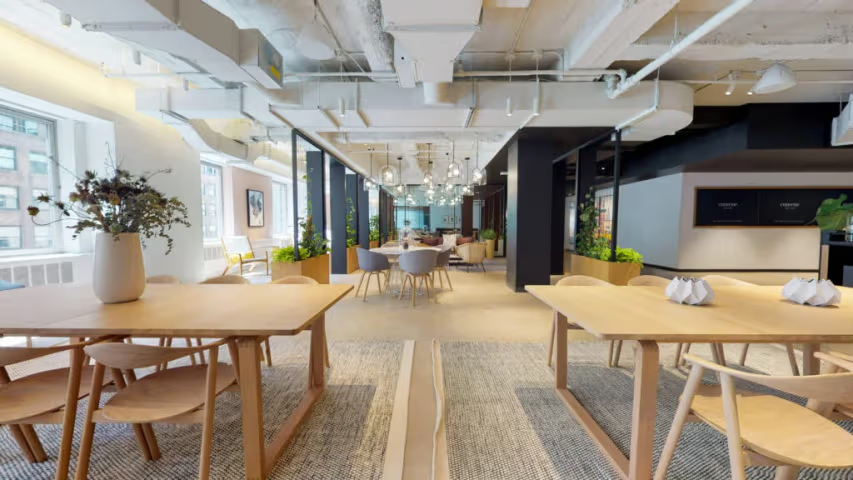
That raises the standard for workplace design. An office built around rows of tightly packed desks may still provide capacity, but it does little for focus, morale, or the varied ways people work throughout the day. The right workspace gives employees access to different settings for concentration, meetings, creative work, informal conversations, and mental breaks. The wrong workspace forces every task into the same environment and employees spend way more time working around the office than benefiting from it.
Businesses that create those environments are better placed to improve productivity, strengthen engagement, and give employees a reason to value their time in the office. This guide looks at how workplace design benefits employee focus, mental well-being, performance, and morale, along with the features that make the greatest difference to the working day.
We are the US's No. 1 marketplace for serviced, coworking, and shared office space.
Connect with our local experts for flexible workspace solutions across the US. Get personalized recommendations, arrange tours, and secure the best deals — all at no cost.




-TX-Plano-500-N-Central-Expy-1112932.jpg)