Managed Offices vs. Traditional Offices: A Comparative Guide

Managed Offices vs. Traditional Offices: A Comparative Guide

Written by: Daniel Lange

Last Update: 6 April, 2025Read: 7 minutes
Flexibility in the workplace was once unheard of. Previous generations worked in environments where rigid schedules, long hours, and designated office spaces dictated their daily routines. Imagine long hours spent seated at a desk, with stiff shoulders and minimal movement as they persevered through their 9-to-5 shifts.

The clock dictated their work life, and the focus was simply on getting the job done—much like a machine or robot!

However, over the years, the landscape of office work has undergone a significant transformation. The rise of managed offices marked a pivotal shift in how businesses operate. In the past, companies were tied to long-term leases and fixed office spaces, but as the demand for flexibility grew, managed office spaces began to dominate.

This shift to managed offices gained momentum after the pandemic, which forced many businesses to adapt to remote and hybrid work models. Today, we no longer have to stick to rigid schedules or work from a fixed desk. With managed office spaces, employees can work at their own pace while a dedicated team takes care of everything from maintenance to IT support.

But is a managed office better for your business, or is a traditional workspace still the perfect option? Managed offices vs. traditional offices–which is better? Dig in and let’s find the answer!

Traditional Offices

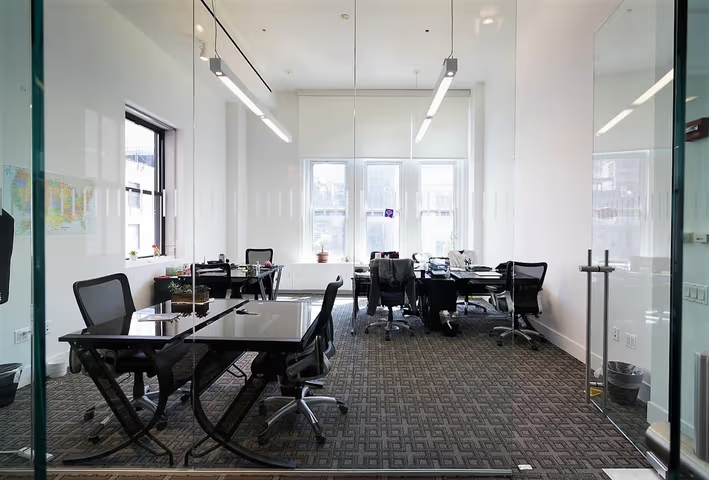
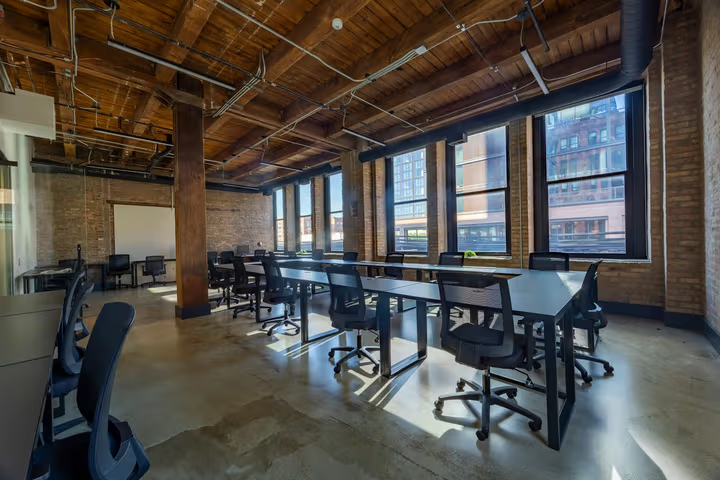
Traditional offices are defined by dedicated, private workspaces. They emphasize individual work and in-person interactions while focusing on a hierarchical structure and fixed working hours.

Managed Offices

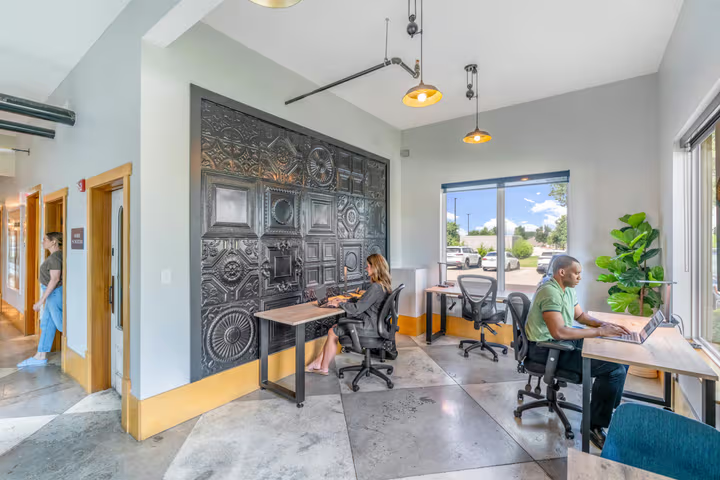
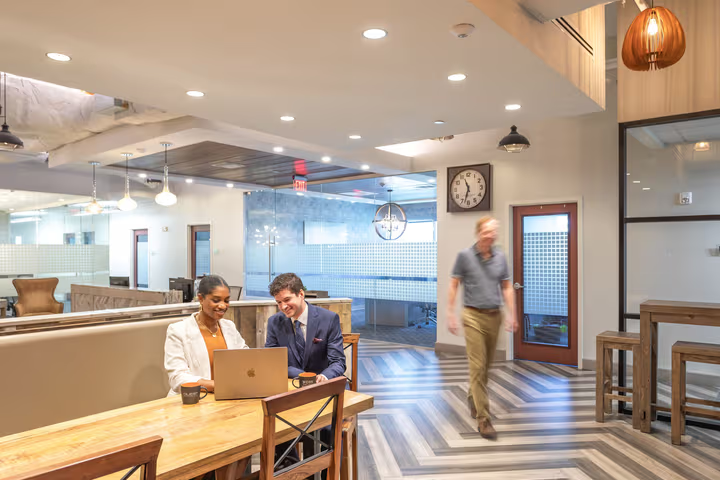
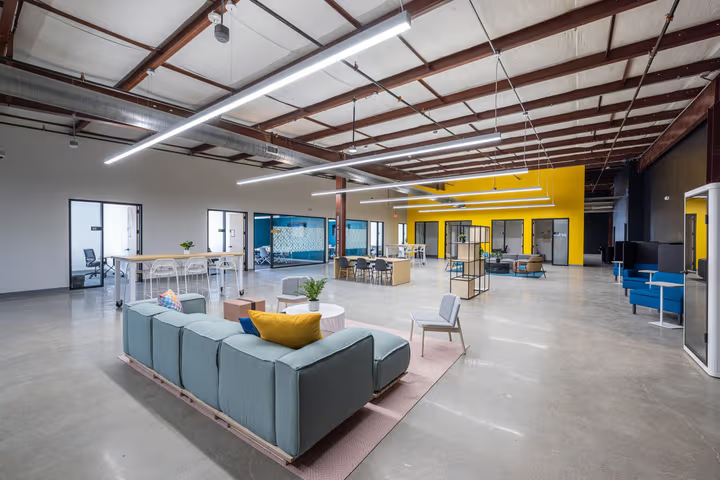
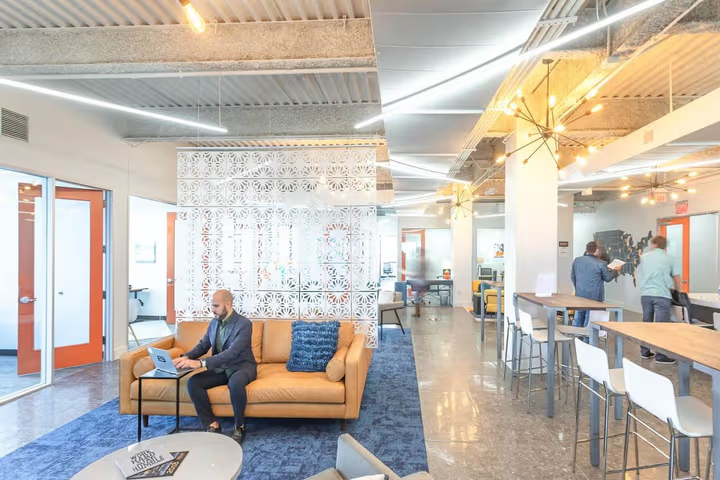
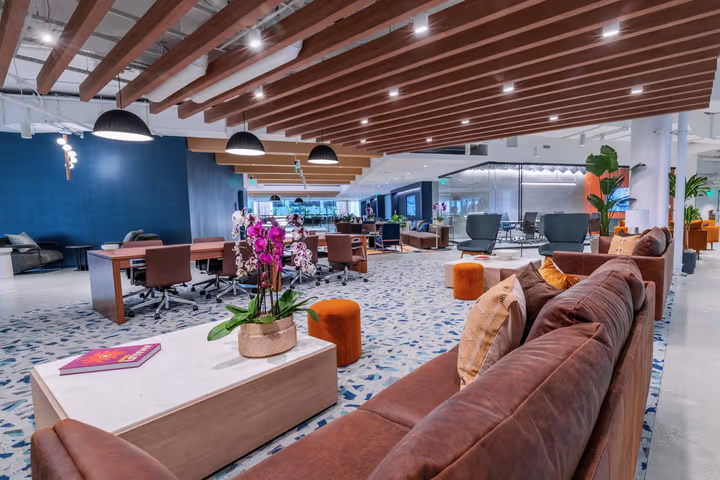
Managed offices are fully furnished, self-contained workspaces rented by businesses and managed by a third-party provider. They allow customization to meet the tenant's needs, providing a flexible and cost-effective alternative to traditional office leasing.

Managed Offices vs. Traditional Offices: Key Differences

Below are the key differences between managed and traditional offices.
 

Differences

Managed Offices

Traditional Offices

1. Lease & Rental Terms

Shorter, more flexible lease agreements, often monthly rolling contracts

Only offer long-term leases, usually ranging from 3-10 years

2. Cost & Investement

Offer a cost-effective solution with all-inclusive monthly fees, eliminating the need for significant upfront investments and managing utilities, cleaning, and maintenance

Require substantial upfront investment in furniture, equipment, IT infrastructure, utilities, and long-term lease commitments

3. Customization 

Limited customization options; spaces are often pre-configured 

Complete customization options, allowing for unique design and layout

4. Maintenance & Support

Provider handles maintenance and support 

Tenant is responsible for maintenance and support

5. Operational Responsibility

Less operational responsibility on the tenant, as the provider manages utilities, cleaning, etc.

The tenant is responsible for all operational aspects of the office

6. Amanities & Services 

Often include amenities like conference rooms, printers, reception services, and networking opportunities 

Amenities and services are typically the responsibility of the tenant to arrange and pay for

7. Setup Time & Growth Potential 

Faster setup time, easier to scale up or down 

Longer setup time, more difficulty to scale quickly

Pros and Cons of Managed Offices

Below are the pros and cons of managed offices.

Pros of Managed Offices

  • Managed offices typically have lower upfront costs and can be more cost-effective, especially for smaller businesses or startups.
  • Managed offices offer greater scalability, allowing businesses to expand or downsize their space.
  • Managed offices often include amenities and services like reception, mail handling, and meeting rooms.
  • Managed office providers handle daily operations, allowing business owners to focus on core activities.

Cons of Managed Offices

  • Managed offices offer limited customization options, as the space is already designed and furnished.
  • Shared spaces may compromise privacy and data security.
  • Open-plan designs can lead to distractions and noise.
  • Businesses have less control over the space's design, layout, and atmosphere.

Pros and Cons of Traditional Offices

Below are the pros and cons of traditional offices.

Pros of Traditional Offices

  • Traditional offices often provide quieter environments and dedicated workspaces, allowing employees to concentrate on tasks with fewer distractions. 
  • The physical proximity of employees in a traditional office can foster stronger relationships and a sense of community. 
  • Traditional offices can facilitate face-to-face interactions, making it easier for teams to collaborate and quickly resolve issues. 
  • A dedicated workspace can help employees maintain a more apparent distinction between work and personal life.

Cons of Traditional Offices

  • Traditional office setups can lack the flexibility of modern, hybrid, or remote work arrangements, potentially hindering employee autonomy and job satisfaction. 
  • While some traditional offices facilitate collaboration, others can have a hierarchical structure that limits cross-departmental interaction and innovation. 
  • Traditional office spaces can be more expensive to lease or maintain than shared or flexible workspaces. 
  • Some employees may find the structured environment of a traditional office to be stifling and experience decreased productivity due to a lack of autonomy or flexibility.

Why Are Businesses Switching from Traditional to Managed Offices?

For several reasons, more businesses are switching from traditional offices to managed office spaces. Managed offices offer flexibility with short-term leases, allowing companies to scale their space as needed.

They also cut overhead costs by including utilities, internet, and office equipment in the rental price. Businesses can access premium amenities like high-speed internet, meeting rooms, and shared resources without the upfront costs.

Plus, managed offices foster community, with opportunities to network and collaborate. This flexibility also supports remote and hybrid work models, making adapting to changing work trends easier.

Overall, managed offices provide a cost-effective, convenient, and scalable solution for modern businesses.

The Future of Work: Flexible, Efficient, and Hassle-Free!

The rise of managed offices didn’t happen overnight. Traditional offices have long been the standard, but they come with limitations—long leases, high overhead costs, and inflexible schedules.

Managed offices emerged as the ideal solution as work culture evolved and the need for more flexibility grew. They provide a more adaptable and cost-effective workspace model, allowing businesses to scale up or down as needed.

The pandemic accelerated this shift, forcing businesses to rethink their operations and embrace remote and hybrid work models. As the demand for flexibility grew, managed offices overshadowed traditional spaces, offering a more modern, efficient alternative.

Managed offices offer the perfect solution for businesses looking to stay ahead. Contact Office Hub now to book your managed office today and customize it your way!

Frequently Asked Questions (FAQs)

Businesses are increasingly switching from traditional office spaces to managed offices for cost-effectiveness, flexibility, and convenience. These offices allow companies to avoid significant upfront costs, scale operations easily, and focus on core business activities.
Managed offices offer advantages like lower upfront costs, flexibility, and scalability, while traditional offices provide more customization and control but at a higher price and with less flexibility.
Yes, managed offices are customized to meet specific business needs, offering flexibility in layout, amenities, and branding.
Switching to a managed office has long-term benefits. These include cost-effectiveness, flexibility, scalability, and reduced operational hassles, allowing businesses to focus on core activities and adapt to changing needs.
Managed offices reduce operational costs by bundling essential services like utilities, furniture, and IT support into a single, often predictable, monthly fee. These services are also provided to many coworking businesses. This eliminates the need for companies to manage these expenses separately and reduces upfront costs.

Daniel Lange
Daniel Lange
ABOUT THE AUTHOR
Daniel Lange
Daniel Lange is an athletic sales and finance expert who ensures seamless workspace deals. With his excellent analytical and problem-solving skills, you can trust that you’ll receive the best option for your unique workspace needs.

We are the US's No. 1 marketplace for serviced, coworking, and shared office space.

Connect with our local experts for flexible workspace solutions across the US. Get personalized recommendations, arrange tours, and secure the best deals — all at no cost.


Office Hub team memberOffice Hub team memberOffice Hub team memberOffice Hub team member

Talk to our Experts directly

646 741 8226

Latest News

Explore trends, data, and tips shaping United States’s dynamic office market

4 Successful Startups That Started in Coworking Spaces

4 Successful Startups That Started in Coworking Spaces

Coworking spaces are often treated like a temporary stopgap useful for freelancers or consultants, early-stage founders, remote workers, and... Read more
Angeline Suriaatmaja30 June, 2026
10 Essential Questions to Ask Before Choosing a Coworking Space

10 Essential Questions to Ask Before Choosing a Coworking Space

A coworking space can look perfect during a 20-minute tour. The desks look tidy, the meeting rooms are empty, the WiFi works, and the commun... Read more
Miles Anderson29 June, 2026
Death of the Fixed Desk: And the Future of Office Work

Death of the Fixed Desk: And the Future of Office Work

The fixed desk made sense when office life was predictable. Most people came into the same office, sat in the same spot every day (Sheldon C... Read more
Grant Philipp25 June, 2026
Hybrid Office Models Explained (and Which One Fits Your Team)

Hybrid Office Models Explained (and Which One Fits Your Team)

A few years ago, most businesses could start their office space search with a simple question: how many desks do we need? That is harder now... Read more
Rebecca Philipp24 June, 2026
What Type of Office Space Works Best for Your Industry?

What Type of Office Space Works Best for Your Industry?

Choosing an office used to start with a simple question: how many desks do we need? Hybrid work , especially after the pandemic, has made th... Read more
Rebecca Philipp22 June, 2026
9 Office Space Challenges for Small Businesses in 2026

9 Office Space Challenges for Small Businesses in 2026

Choosing an office space used to begin with a fairly simple calculation and three main questions: how many people are on the team, how many ... Read more
Andrew Beck22 June, 2026
Flexible workspace membership types: which makes sense for your team?

Flexible workspace membership types: which makes sense for your team?

Flexible workspace is not new, but the way businesses use it has changed. What used to sit on the edge of the office market is now part of e... Read more
Daniel Lange17 June, 2026
The Best Coworking Conferences in 2026 for Operators and Flex-Space Leaders

The Best Coworking Conferences in 2026 for Operators and Flex-Space Leaders

Not every coworking conference is worth travelling for. Some put you in the right room with operators, investors, suppliers, and partners wh... Read more
Rick Kamikura16 June, 2026
What is a flexible workspace? Types, examples, and benefits

What is a flexible workspace? Types, examples, and benefits

Work no longer happens in one fixed pattern for every business, especially in a post-pandemic world where remote work has become the new nor... Read more
Daniel Lange16 June, 2026
What Is a Virtual Office? How It Works, Benefits and Who It’s For

What Is a Virtual Office? How It Works, Benefits and Who It’s For

A business address does more than tell people where to send mail . It can shape how your company is perceived by clients and potential emplo... Read more
Grant Philipp16 June, 2026
Breaking New Ground: Inventory Integrations That Change Everything

Breaking New Ground: Inventory Integrations That Change Everything

In the flexible workspace game, speed and accuracy matter. Outdated listings, incorrect availability, and manual updates don’t just slow you... Read more
Rebecca Philipp11 May, 2026
The BEST Coworking Spaces in Plano

The BEST Coworking Spaces in Plano

Looking for a coworking space in Plano? You have come to the right place. Desks in Plano are available for an average price of US$113 per we... Read more
Rebecca Philipp1 April, 2026