NDEAM 2026: What Does an Accessible Coworking Space Actually Look Like?
Last Update: 14 October, 2026•Read: 5 minutes
In September 2026, a substantial employment gap persisted for disabled individuals: The Arc reports that 40.3% of working-age people with disabilities were employed, compared with 75% of people without disabilities.
Every October, National Disability Employment Awareness Month (NDEAM) puts disability employment in the spotlight. The US Department of Labor’s 2026 theme, “Celebrating Value and Talent,” recognizes the skills and contributions people with disabilities bring to workplaces, communities and the wider economy.
Recognition cannot stop at recruitment. A person can get the job, join the team, and still be expected to work in an environment that creates unnecessary barriers every day. For businesses using coworking spaces as part of a hybrid or flexible workplace strategy, the question becomes critical. While the employer doesn’t own the building, control the fit-out, or manage the facilities, it is still choosing a workplace its employees are expected to use. Accessibility can't be left to the coworking operator or assumed merely because a building is labeled accessible.
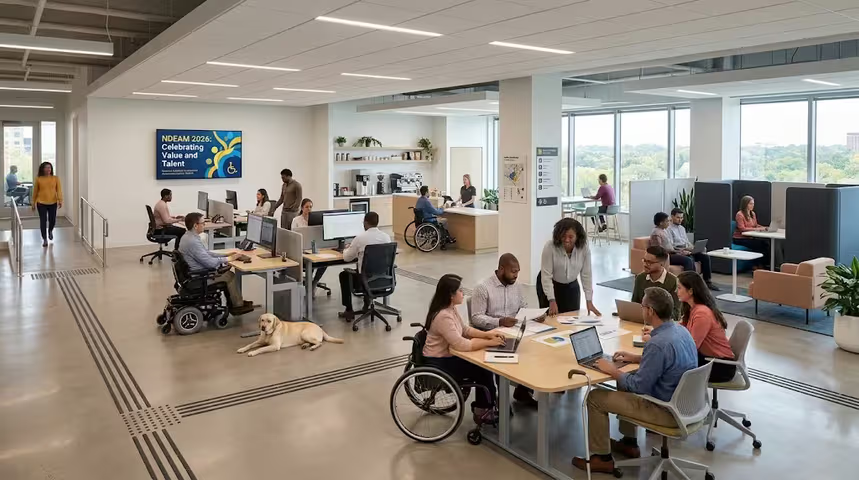
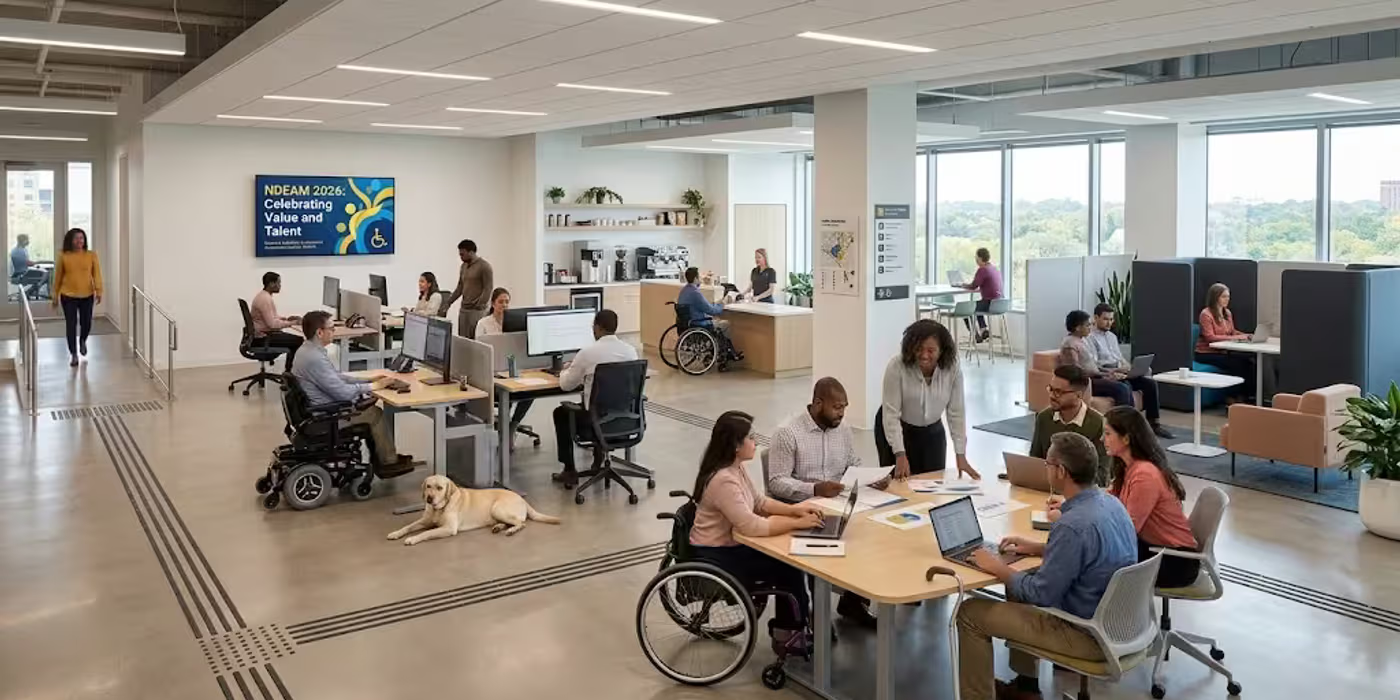
So, what does an accessible coworking space actually look like?
It starts well before the wheelchair ramp and extends far beyond it. Can your employees arrive, find their way around, work comfortably, use shared facilities, attend meetings, access workplace technology, and leave safely without repeatedly needing somebody else to solve avoidable problems?
For employees choosing a coworking space for themselves, and for business owners, HR teams, and operations leaders selecting one for others, assess accessibility at that level.
We are the US's No. 1 marketplace for serviced, coworking, and shared office space.
Connect with our local experts for flexible workspace solutions across the US. Get personalized recommendations, arrange tours, and secure the best deals — all at no cost.