Serviced vs. Managed vs. Leased Offices:  Which is Better?

Serviced vs. Managed vs. Leased Offices: Which is Better?

Written by: Andrew Beck

Last Update: 21 February, 2025Read: 5 minutes
Looking for an office space that meets your business needs without exceeding your budget? With so many options available—serviced, managed, and leased offices—choosing the right one can be overwhelming.

Each office type offers unique benefits, from fully furnished setups with flexible terms to long-term leased spaces with complete control. But which one is the perfect fit for your business?

In this blog, we’ll break down each office space type's key differences and advantages, helping you make an informed decision. Are you excited?  Let’s explore the best workspace solution for you!

What are Serviced Offices?

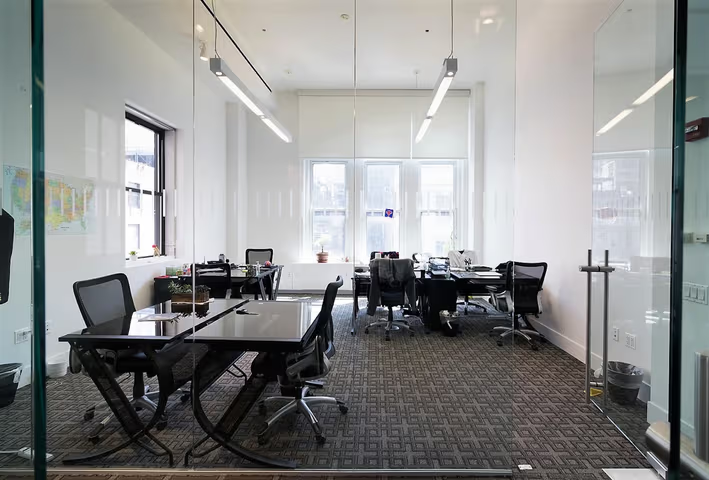
Serviced offices are fully furnished workspace solutions with the amenities and services you need for your business operation. Office management is not a problem here, as the workspace provider handles all your administrative tasks, from clearing and kitchen services to IT support and mail and telephone answering.

The key offerings in serviced offices are:
 
 
  • Fully furnished spaces: Ready-to-move office spaces with fully equipped furniture.
  • Flexible Lease Terms: These are mostly short-term agreements, starting from one month and continuing for an extended period. 
  • Admin Support: The provider staff is highly trained and handles all basic management tasks, such as reception service, mail handling, and telephone answering. They also fix issues upon complaint, such as repairing or replacing office equipment. 
  • Inclusive Utilities: Electricity, water, internet, and cleaning services are included within the package. 
  • 24/7 Access: Round-the-clock availability to fit your work schedule.
  • Meeting Rooms: Fully equipped meeting rooms with modern designs are available for client dealings or team discussions. 
  • Shared Amenities: Access to public lounges, kitchens, restrooms, and common areas.
  • All-inclusive Packages: Everything from office setup to utilities is typically covered.

What are Managed Offices?

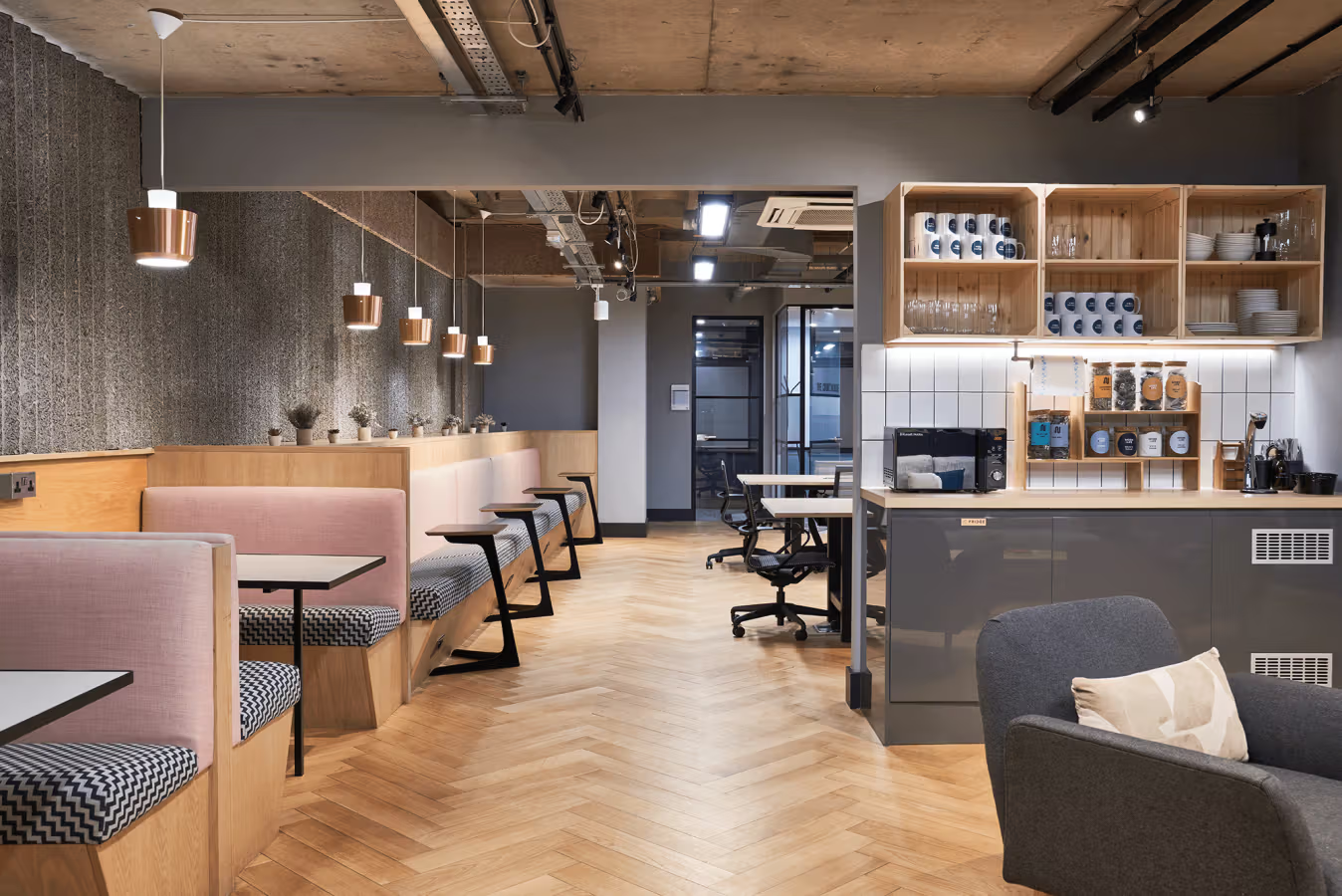
Managed offices are similar to serviced offices but allow tenants to personalize the space and services. Simply put, they are like blank canvases that tenants fill according to their business needs. Managed offices offer flexibility and a high level of support so that tenants can get what they desire.

The key offerings in Managed offices are:
 
 
  • Customizable Spaces: Tenants personalize their office spaces according to their requirements. 
  • On-site Support: Dedicated staff manages administrative tasks and services. 
  • Longer Lease Terms: Lease terms are typically longer than those of serviced offices, starting at one year and extending to more years. 
  • Partial Furnishing: Some furniture and equipment are provided, while others are personalized.
  • Technology Infrastructure: High-speed internet and advanced IT setups.
  • Private Meeting Rooms: More exclusive and personalized meeting spaces.
  • Operational Flexibility: Companies manage their teams but with external support.
  • Shared Amenities: Use of building facilities, such as lounges and cafes.

What are Leased Offices?

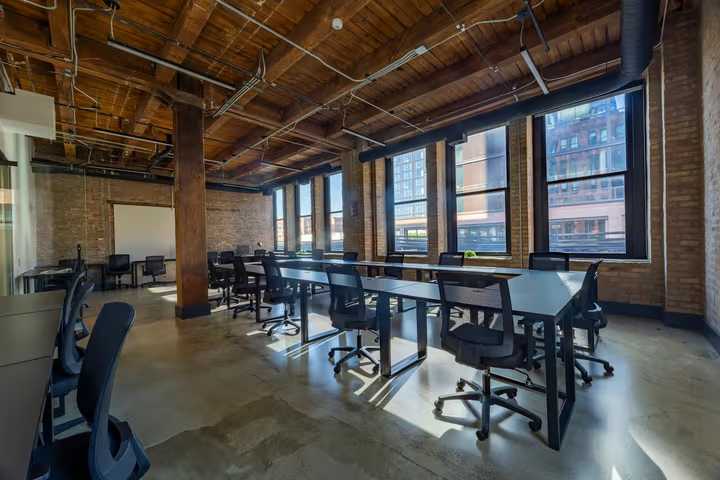
Leased offices are the traditional spaces. They are long-term spaces rented directly from a landlord and are usually priced per square foot. While they provide complete control over the workspace, businesses must independently handle setup, maintenance, and facility management.

The key offerings in leased offices are:
 
 
  • Full Customisation: Businesses can design and furnish the space according to their brand identity and operational needs.
  • Long-term Commitment: Lease agreements generally last from a few months to years, making them ideal for companies seeking stability.
  • Cost Efficiency: While the initial setup requires significant investment, leasing can be more cost-effective in the long run.
  • No Shared Space: Unlike serviced or managed offices, leased offices provide a private work environment.
  • Independent Management: Tenants are responsible for arranging utilities, furniture, internet, and maintenance, ensuring complete control over office operations.

What are the Key Differences between Serviced, Managed, and Lease Offices?

The three offices differ primarily in flexibility, customization, cost, and management. Serviced offices provide a hassle-free, ready-to-use workspace, managed offices offer a balance of control and convenience, and leased offices give businesses complete autonomy with long-term commitments.

Here’s how they compare across key features:

1. Flexibility & Lease Terms

Serviced offices provide the most flexibility, offering short-term leases that allow businesses to expand or relocate without long-term commitments. Managed offices have moderate flexibility, with lease terms ranging from a few months to a few years. They are suitable for businesses that require stability but still want adaptability. Leased offices, however, require long-term commitments, typically lasting five or more years.

2. Customization & Control

Businesses in serviced offices have limited customization options since these spaces come pre-furnished with a standard layout. Managed offices allow more personalization, allowing companies to adjust branding, layouts, and workspace arrangements. Leased offices offer the highest level of customization, as businesses have complete control over office design, furniture, and layout.

3. Setup Time & Convenience

Serviced offices require no setup time, as they come fully equipped with furniture, IT infrastructure, and essential services. Managed offices take slightly longer to set up, as businesses may need to adjust to meet their operational needs. Leased offices require the longest setup time because companies need to arrange furniture, IT systems, and utilities. This leads to a lengthy transition period before the office is fully functional.

4. Management & Maintenance

Serviced offices are fully managed by the provider, covering everything from security and cleaning to IT support and administrative services. Managed offices include maintenance, but businesses handle certain aspects, such as selecting service providers. Leased offices place the business's management and maintenance responsibility, meaning companies must handle it independently.

5. Cost Structure

Serviced offices operate on an all-inclusive pricing model, where rent, utilities, maintenance, and additional services are bundled into a single monthly fee. Managed offices have a semi-inclusive model, where some services are included, but businesses may need to pay separately for certain features like additional IT support or facility upgrades. Leased offices tend to have the highest upfront and ongoing costs, as businesses must pay rent, utilities, maintenance, and any modifications to the space separately.

6. Networking and Collaboration

Serviced offices promote collaboration through shared workspaces and community-driven environments. Managed offices offer a semi-private setup where businesses can work independently while still having access to common areas. On the other hand, leasing offices are private and offer fewer networking opportunities but provide a more focused work environment.

The Bottom Line

Serviced offices are ideal for startups, freelancers, and businesses that require a flexible, ready-to-use solution with minimal responsibility. Managed offices cater to growing companies that need customization while benefiting from external management. Leased offices are best for established businesses that seek long-term stability, complete control over their workspace, and the ability to handle all office operations independently.

Below is a summary of the key differences between serviced, managed, and leased offices.


Serviced Offices

Managed Offices

Leased Offices

Flexibility

Short-term lease agreements

Moderate flexibility

Long-term commitment

Customization

Standard layout and furniture

Balance of customisation

Full customisation

Setup Time

No setup time required

Short amount of time to set up

Lengthy setup process

Management

Fully managed by the provider

Partially managed

Self-managed

Cost Structure

All-inclusive pricing model

Semi-inclusive model

Separate payments for each service

Networking

High networking opportunities

Moderate networking

Low networking 

Best For

Startups, freelancers, and businesses need a flexible, hassle-free workspace.

Growing companies

Established businesses that need long-term stability and full control

Which Office Space is Best for Your Business?

Choosing the right office space depends on your business size, budget, and long-term goals. A serviced office is the most convenient option if you need flexibility with minimal setup. Managed offices balance customization and hassle-free operations, making them suitable for growing businesses. Leased offices provide complete control but require significant investment and long-term commitment, making them ideal for established companies.

Consider factors like scalability, operational control, and lease duration when deciding. The right office space should align with your business needs, ensuring efficiency, growth, and a productive work environment.

How Office Hub Can Help You?

Finding the right office space can be stressful. Office Hub makes it easy by guiding you through the process. We help you explore serviced, managed, and leased offices based on your needs and budget.

Our team shortlists the best spaces, arranges site visits, and negotiates great deals. It saves you time and ensures you get the best value.

Whether you need a flexible space or a long-term lease, we’ve covered you. With our vast network, we find the perfect office for your business. Let Office Hub handle the search—contact us today!

Frequently Asked Questions (FAQs)

The type of office space that best suits your requirements depends on your needs. Serviced offices suit businesses needing flexibility and ready-to-use spaces. Managed offices offer customization with minimal setup hassle. Leased offices provide full control but require a long-term commitment. It is better to compare and select the best fit.
Consider your budget, level of customization, and lease commitment. Consider how much control you need over the space—factor in ongoing costs, lease flexibility, and whether services like IT support and cleaning are included. For more information, visit Office Hub.
Serviced offices are the most cost-effective for short-term needs, while leased offices provide better value for long-term commitments. Managed offices offer a balance between cost and convenience.
Serviced offices have the most flexible contracts, allowing short-term commitments. Managed offices offer customized agreements based on business needs. Leased offices require long-term commitments with fixed terms.
Serviced offices offer the most flexibility, with short-term leases, ready-to-use setups, and easy scalability. This is ideal for businesses looking for a workspace that they can easily scale up or down.
Yes, you can switch from a serviced office to a leased one later. It requires planning for setup, lease terms, and additional costs.
Serviced and managed offices are better for scaling businesses. They offer flexible terms, easy expansions, and minimal setup costs.

Andrew Beck
Andrew Beck
ABOUT THE AUTHOR
Andrew Beck
Andrew Beck is a powerhouse in driving sales growth and cultivating strong client and partner relationships. Andrew also combines strategic vision and innovation to deliver exceptional results, inspiring teams to exceed goals and redefine excellence.

We are the US's No. 1 marketplace for serviced, coworking, and shared office space.

Connect with our local experts for flexible workspace solutions across the US. Get personalized recommendations, arrange tours, and secure the best deals — all at no cost.


Office Hub team memberOffice Hub team memberOffice Hub team memberOffice Hub team member

Talk to our Experts directly

646 741 8226

Latest News

Explore trends, data, and tips shaping United States’s dynamic office market

4 Successful Startups That Started in Coworking Spaces

4 Successful Startups That Started in Coworking Spaces

Coworking spaces are often treated like a temporary stopgap useful for freelancers or consultants, early-stage founders, remote workers, and... Read more
Angeline Suriaatmaja30 June, 2026
10 Essential Questions to Ask Before Choosing a Coworking Space

10 Essential Questions to Ask Before Choosing a Coworking Space

A coworking space can look perfect during a 20-minute tour. The desks look tidy, the meeting rooms are empty, the WiFi works, and the commun... Read more
Miles Anderson29 June, 2026
Death of the Fixed Desk: And the Future of Office Work

Death of the Fixed Desk: And the Future of Office Work

The fixed desk made sense when office life was predictable. Most people came into the same office, sat in the same spot every day (Sheldon C... Read more
Grant Philipp25 June, 2026
Hybrid Office Models Explained (and Which One Fits Your Team)

Hybrid Office Models Explained (and Which One Fits Your Team)

A few years ago, most businesses could start their office space search with a simple question: how many desks do we need? That is harder now... Read more
Rebecca Philipp24 June, 2026
What Type of Office Space Works Best for Your Industry?

What Type of Office Space Works Best for Your Industry?

Choosing an office used to start with a simple question: how many desks do we need? Hybrid work , especially after the pandemic, has made th... Read more
Rebecca Philipp22 June, 2026
9 Office Space Challenges for Small Businesses in 2026

9 Office Space Challenges for Small Businesses in 2026

Choosing an office space used to begin with a fairly simple calculation and three main questions: how many people are on the team, how many ... Read more
Andrew Beck22 June, 2026
Flexible workspace membership types: which makes sense for your team?

Flexible workspace membership types: which makes sense for your team?

Flexible workspace is not new, but the way businesses use it has changed. What used to sit on the edge of the office market is now part of e... Read more
Daniel Lange17 June, 2026
The Best Coworking Conferences in 2026 for Operators and Flex-Space Leaders

The Best Coworking Conferences in 2026 for Operators and Flex-Space Leaders

Not every coworking conference is worth travelling for. Some put you in the right room with operators, investors, suppliers, and partners wh... Read more
Rick Kamikura16 June, 2026
What is a flexible workspace? Types, examples, and benefits

What is a flexible workspace? Types, examples, and benefits

Work no longer happens in one fixed pattern for every business, especially in a post-pandemic world where remote work has become the new nor... Read more
Daniel Lange16 June, 2026
What Is a Virtual Office? How It Works, Benefits and Who It’s For

What Is a Virtual Office? How It Works, Benefits and Who It’s For

A business address does more than tell people where to send mail . It can shape how your company is perceived by clients and potential emplo... Read more
Grant Philipp16 June, 2026
Breaking New Ground: Inventory Integrations That Change Everything

Breaking New Ground: Inventory Integrations That Change Everything

In the flexible workspace game, speed and accuracy matter. Outdated listings, incorrect availability, and manual updates don’t just slow you... Read more
Rebecca Philipp11 May, 2026
The BEST Coworking Spaces in Plano

The BEST Coworking Spaces in Plano

Looking for a coworking space in Plano? You have come to the right place. Desks in Plano are available for an average price of US$113 per we... Read more
Rebecca Philipp1 April, 2026