How to Read an Office Lease Agreement (Without Getting Lost)
Last Update: 1 December, 2025•Read: 10 minutes
Signing an office lease can feel overwhelming, especially with all the legal jargon, fine print, and different lease types. Whether you’re moving into a traditional commercial space or exploring flexible office options, understanding the terms of your agreement is critical to avoiding surprises, hidden costs, or restrictive clauses.
This guide is designed to equip tenants with the knowledge needed to navigate the office leasing landscape.
Key Topics Covered:
Our Goal is to Empower Tenants to:
So, without further ado, dive into it!
This guide is designed to equip tenants with the knowledge needed to navigate the office leasing landscape.
Key Topics Covered:
- Lease fundamentals and common lease structures
- Exploring flexible workspace solutions
- Crucial lease clauses tenants must be aware of
Our Goal is to Empower Tenants to:
- Review office leases carefully
- Effectively identify potential risks
- Make strategic decisions that align with their team size, budget, and future expansion requirements
So, without further ado, dive into it!
What is an Office Lease Agreement?
Tips for Reading Office Lease Agreements Effectively
1. Identify the Clauses That Matter Most
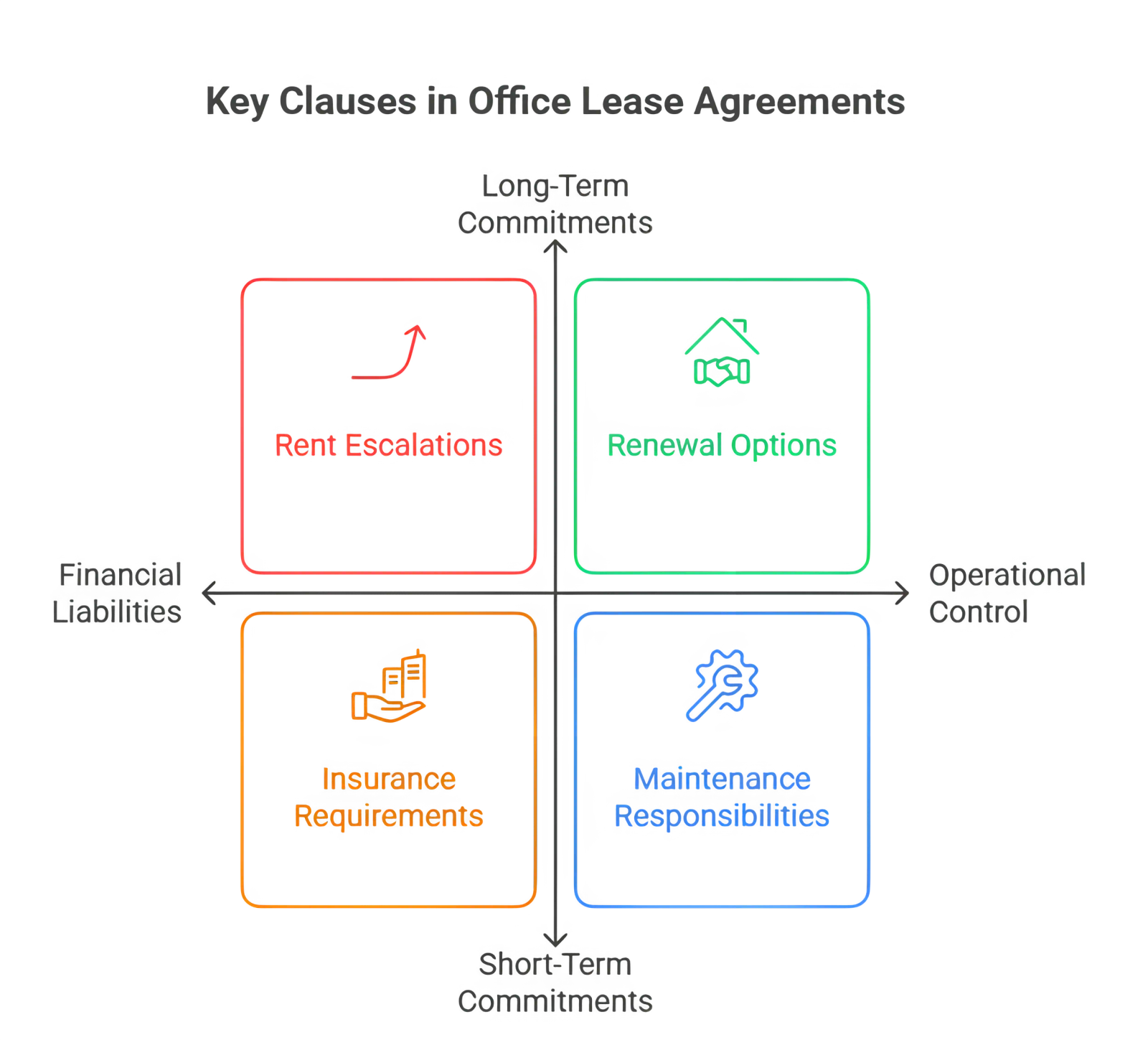
2. Understand Rent, Escalations, and Operating Expenses
3. Clarify Maintenance, Repairs, and Responsibilities
4. Review Renewal Options, Early Termination, and Subleasing Rights
5. Check for Rules, Restrictions, or Required Approvals
6. Pay Close Attention to Insurance and Liability Requirements
7. Note Important Deadlines Throughout the Lease
8. When to Ask Questions or Seek Professional Guidance
Typical Lengths and Structures of Office Leases
1. Short-Term vs Long-Term Commitments
2. Cost Structure and Setup
3. Scalability, Control, and Culture
4. Lease Structures: Gross vs. Net Leases
Leases vs. Licenses
Mitigating Risk: Financial Liabilities and Control in Different Office Structures
Operational Control and Liability Allocation
Exit Strategy and Early Termination
Always Take Your Time to Read an Office Lease Agreement!
How Does Office Hub Help You with Reviewing and Understanding an Office Lease Agreement?
Frequently Asked Questions (FAQs)
This clause determines your legal ability to transfer your lease obligations to another party if your business needs to exit the space before the lease term ends. Clearly defined rights are essential for mitigating financial risk and ensuring future flexibility.
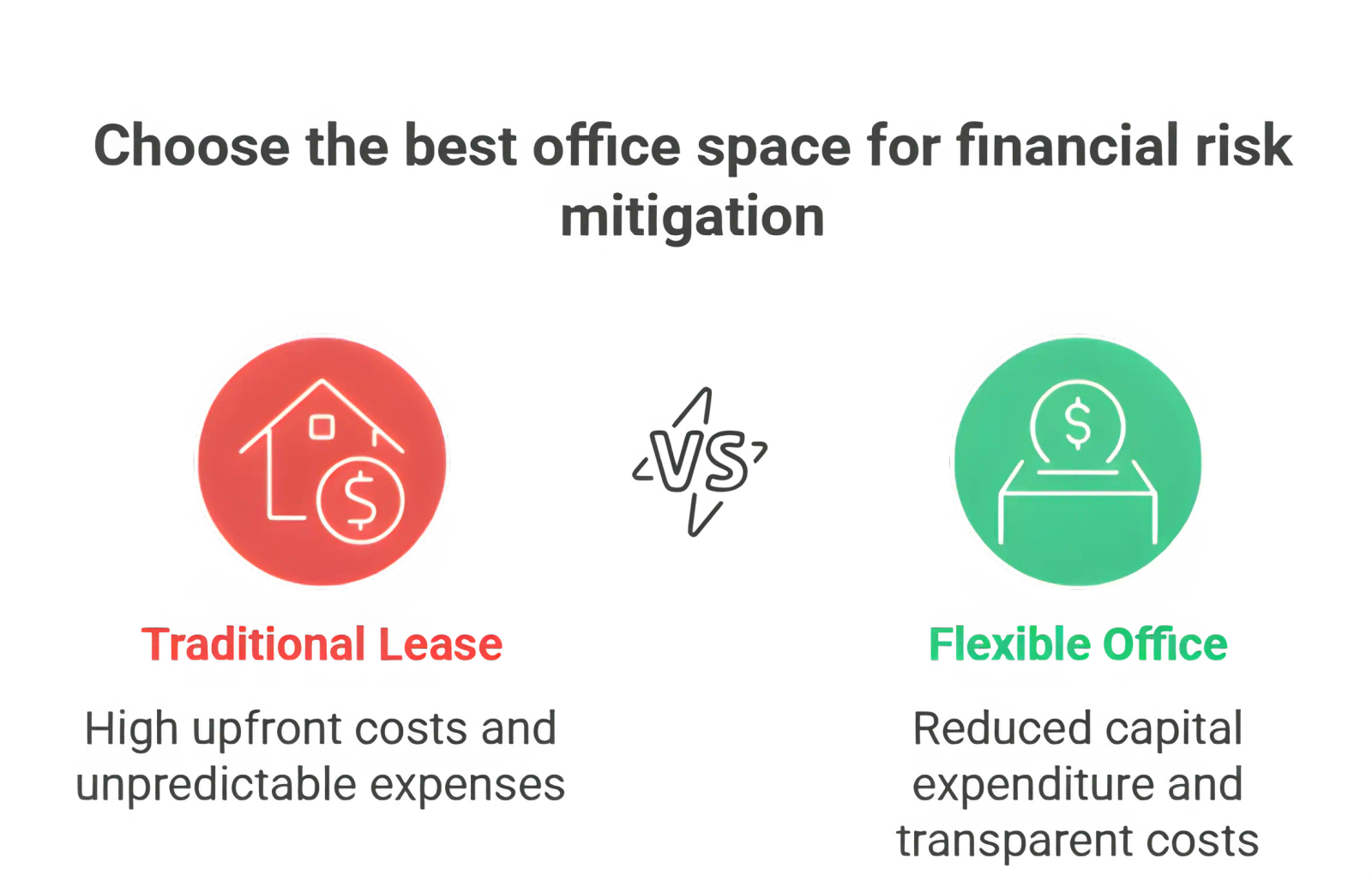
A traditional lease locks you into a long-term, 3–10-year contract with high upfront costs for fit-outs and furniture, granting you exclusive control over the space. A flexible office membership or license is short-term and all-inclusive, bundling utilities and maintenance costs for immediate, hassle-free occupancy and quick scalability.
You must prioritize clauses covering the total cost, including the base rent, the rate or method for rental escalations over the term, and your precise share of any Operating Expenses (OpEx), such as taxes and maintenance. Understanding these immediately prevents future financial surprises or disagreements.
In a gross lease, the tenant pays a single base rent, and the landlord covers most building operating costs, offering simplified budgeting. In a Triple Net (NNN) Lease, the tenant pays the base rent plus their proportional share of all property taxes, insurance, and common area maintenance (CAM), which often requires annual reconciliation.
A flexible office solution is built for agility, allowing startups to instantly scale their footprint up or down based on fluctuating team size without the penalties of a long-term commitment. This structure conserves crucial capital by eliminating high upfront costs for furniture and fit-outs.
A lease grants the tenant a transferable, exclusive interest in the real property with stronger legal protections over the term. A license is a less formal, short-term agreement that grants only personal permission to use the space and offers far fewer legal protections or rights upon property transfer.
You must clarify who is legally responsible for maintenance, defining whether the landlord covers structural repairs and HVAC systems, or if you, the tenant, are liable for general upkeep and non-structural repairs within your specific area. Ambiguity in this section can lead to significant, unexpected expenses later on.
OpEx refers to the costs associated with running and maintaining the commercial property, including property taxes, building insurance, and common-area maintenance (CAM) fees. In a Net Lease, you must verify the calculation method and retain the right to audit the landlord's annual reconciliation of these shared costs.
Leases strictly govern timelines; missing a deadline can result in the loss of a valuable option, such as the right to renew your lease. The most critical date to track is the notice period for exercising a renewal option or termination, as this dictates your future planning window.
You should always seek professional guidance from an experienced real estate attorney before signing any long-term or complex commercial lease. Office Hub also recommends this step to ensure the terms fully align with your team size, budget, and business strategy while protecting you from legal and financial pitfalls.

We are the UK's No. 1 marketplace for serviced, coworking, and shared office space.
Connect with our local experts for flexible workspace solutions across the UK. Get personalized recommendations, arrange tours, and secure the best deals — all at no cost.