Handling Shared Space Operations: A Guide for Multi-Tenant Management

Handling Shared Space Operations: A Guide for Multi-Tenant Management

Written by: Andrew Beck

Last Update: 6 January, 2026Read: 10 minutes
Managing a shared workspace is about creating an environment where every tenant feels valued, productive, and supported. When operations run smoothly, coworking and hybrid setups become vibrant communities that attract and retain clients. But when management falls short, even the most beautifully designed space can lose its appeal.

As Woody Williams wisely said, “No matter how good the team or how efficient the methodology, if we are not solving the right problem, the project fails.” In many shared spaces, the real issue isn’t the layout or amenities; it is ineffective management.

With the proper research, systems, and guidance, you can transform a plain, empty floor into an operational space with hot desks, private offices, virtual offices, and enterprise offices. This guide is designed to help operators optimize scheduling, streamline access control, proactively maintain facilities, and cultivate harmony among diverse tenants.

If you are looking to elevate your workspace operations and boost your revenue, you are in the right place. Let’s dive in.

Innovative Ways to Manage Your Workspace: Divide and Optimize Your Space

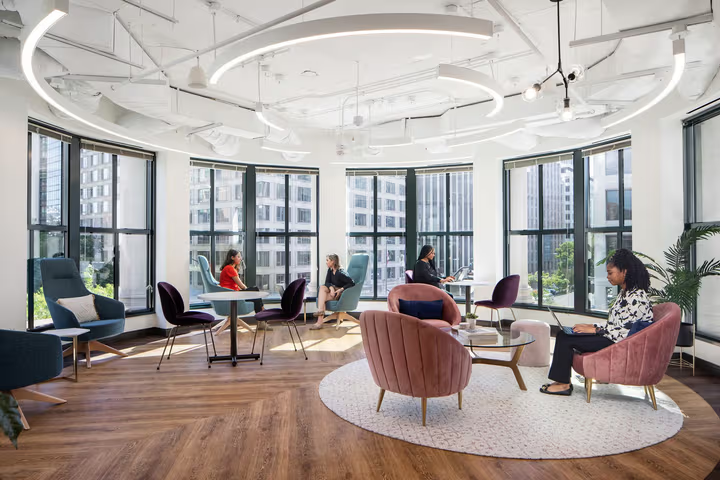
One of the most effective strategies for managing a shared workspace is breaking the space into smaller, purpose-built zones. Instead of treating your office as one single unit, segmenting it into coworking, private, and enterprise setups helps you serve a broader range of clients while maintaining order and boosting profitability.

The top ways to manage your workspace effectively are presented below:

1. Coworking Zones for Flexibility

Coworking spaces are ideal for freelancers, hybrid employees, and startups. Open seating, hot desks, and collaborative spots increase engagement and maximize seat turnover.

2. Private Offices for Growing Teams

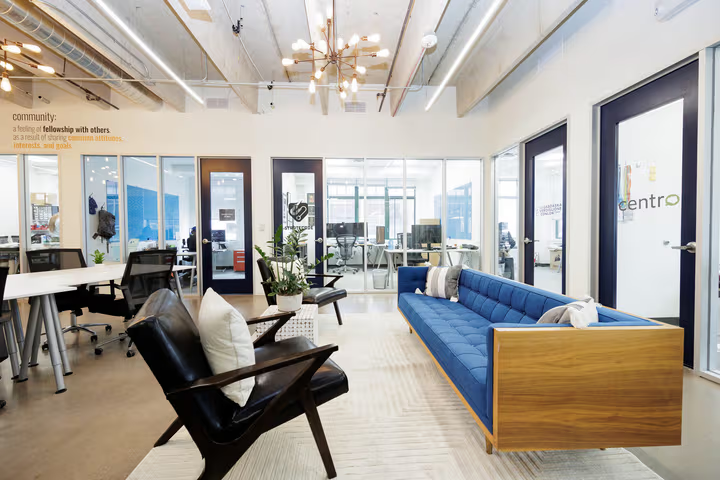
Private cabins offer privacy, security, and dedicated space, ideal for small companies or teams that need focused workspaces. They provide stable, predictable revenue and long-term occupancy.

3. Enterprise Suites for Large Clients

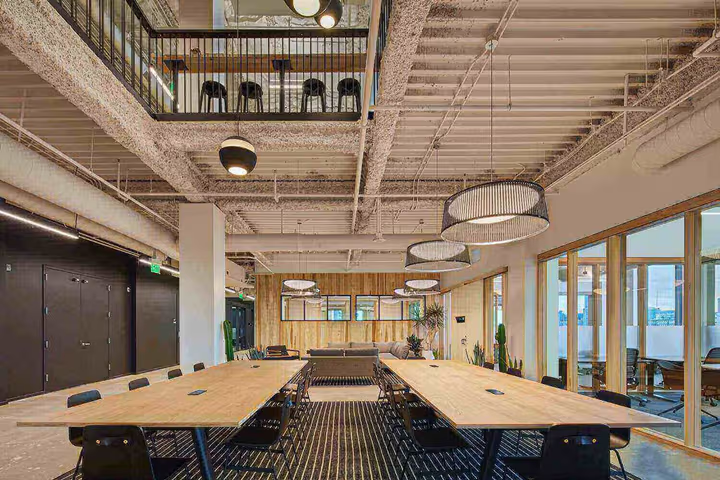
Enterprise spaces offer customizable layouts, dedicated meeting rooms, and branded areas. These high-value clients often sign more extended contracts, thereby enhancing the credibility of your workspace.

4. Balance Allocation Based on Demand

Optimizing your space isn't static. Regularly analyze which zones are performing well and adjust layouts to match tenant demand. A data-driven approach helps you use every square foot wisely.

Want to know which flexible setup can align perfectly with your business niche and requirements? Read our comprehensive guide to “What’s the Difference Between Coworking, Serviced, and Managed Offices” for a detailed insight.

Top 6 Management Techniques for Operational Excellence

Efficiently running a coworking or hybrid workspace requires not just dividing your space but also demands innovative management practices that keep tenants happy, keep operations smooth, and drive revenue growth.

Here are six essential, actionable techniques every operator should implement for operational excellence:

1. Automated Resource Scheduling and Conflict Prevention

Implement a centralized, user-friendly digital booking platform for all bookable assets (desks, meeting rooms, specialized equipment).
  • Key Action: Link the system to external displays outside meeting rooms to show real-time availability and auto-cancel reservations if the member doesn't check in within a grace period (the "No-Show Rule").
  • Benefit: Automated scheduling drastically reduces operational conflicts, saves staff time, and ensures fair access across all tenant tiers.

2. Security-First Tiered Access Control

Utilize modern keyless systems (keycards, mobile apps, or biometrics) to manage physical entry and security.
  • Key Action: Clearly segment access rights: grant 24/7 access to high-value private office and enterprise tenants, while restricting coworking access to business hours, strictly in accordance with their paid plan.
  • Benefit: Protects long-term tenants' assets while providing flexible, controlled access for all members, enhancing overall security and professionalism.

3. Proactive and Predictive Facilities Maintenance

Move beyond reactive repairs by implementing a formalized preventative maintenance schedule.
  • Key Action: Establish a centralized ticketing system for tenant requests and schedule deep cleanings, HVAC filter changes, and equipment servicing before systems fail, especially in high-traffic areas such as the kitchen and restrooms.

Operational Tip: Integrate your environmental goals into this schedule by following structured Office Waste Management Tips. This ensures that recycling pick-ups, e-waste disposal, and composting systems are maintained with the same rigor as your HVAC or security systems.
 
  • Benefit: Prevents costly operational disruptions, extends the lifespan of expensive equipment, and consistently maintains the high standards essential for client retention.

4. Mandatory Clear Policies and Usage Guidelines

Create a simple, easily accessible handbook or digital document detailing rules for shared space utilization.
  • Key Action: Specifically address common friction points: noise-level rules in phone booths, kitchen cleanup expectations, and guest policy limits. Require all new tenants to formally acknowledge these guidelines during onboarding.
  • Benefit: Clearly communicating expectations reduces interpersonal conflicts, promotes fairness, and ensures the diverse needs of different tenant types (e.g., quiet workers vs. sales teams) can coexist.

To create a truly productive environment, complement these policies with strategic Office Acoustics solutions that physically reduce sound transmission between zones.

5. Promoting High-Value Tenant Engagement

Actively invest time and resources in building a strong community and fostering connections among members.
  • Key Action: Organize recurring events that offer genuine networking value, for example, business workshops, skill-share sessions, or conferences, rather than just social gatherings. Facilitate introductions between complementary businesses.
  • Benefit: Engaged tenants are far more likely to renew their contracts, refer to new business, and contribute to a positive, productive work environment.

Interested in boosting retention? Learn how to foster a collaborative and employee-centric culture in our guide: Top 10 Employee Engagement Strategies You Need to Know.

6. Data-Driven Operational Optimization

Regularly capture and analyze key operational data points to guide strategic decisions.
  • Key Action: Monitor metrics like meeting room utilization rates, check-in/check-out frequency, member cancellation rates, and peak occupancy times. Use this data to justify layout changes, price adjustments, or amenity upgrades.
  • Benefit: Ensures management decisions are grounded in profitability and efficiency, enabling you to maximize revenue per square foot and stay ahead of market trends.

Proactive Strategies for Cultivating Tenant Harmony

Even the most efficiently run coworking or hybrid space can falter if tenants clash or feel disconnected. Fostering harmony ensures a positive environment, improves retention, and creates a vibrant community that attracts new members. The operator's role is to act as a community architect, not just a manager.

1. Designate and Enforce "Purpose-Built" Zones

The most common friction point is noise. Prevent conflicts by clearly partitioning the space based on noise levels and required focus.
  • Actionable Tip: Implement and strictly enforce "The Library Rule" in dedicated quiet zones or phone booths. Simultaneously, create designated "Collaboration Hubs" where speaking and team huddles are encouraged, channeling noise away from focused workers.

2. Implement Mandatory Digital Onboarding Agreements

Don't expect tenants to just rely on a handbook. Ensure every member acknowledges the community rules specific to shared space use.
  • Actionable Tip: Require all new tenants (from hot desk to enterprise) to digitally sign or tick to acknowledge the Community Guidelines during sign-up. These must specifically cover kitchen clean-up, guest policies, and noise levels.

3. Establish a Transparent Conflict Escalation Protocol

Members need to know precisely how and to whom they report an issue, ensuring staff manage disputes quickly, fairly, and consistently.
  • Actionable Tip: Use a centralized, easy-to-use digital ticketing system to report non-emergency issues (e.g., policy violations, maintenance). Designate a specific staff member (the "Community Lead") as the sole point of mediation for interpersonal disputes.

4. Facilitate High-Value, Low-Pressure Networking

Community building should feel like a genuine value-add, not a forced activity. Focus on connections that benefit their business.
  • Actionable Tip: Instead of just social mixers, organize recurring Skill-Share Sessions or Business Workshops (e.g., "Lunch & Learn") where members can learn from or hire one another. This creates business ties that strengthen community bonds. Or you can read our detailed guide on How to Network in a Flexible Workspace and Build Connections for a head start.

5. Act as a Proactive Connector and Matchmaker

The operator should actively seek opportunities to facilitate positive interactions between complementary businesses.
  • Actionable Tip: When onboarding a new tenant, introduce them directly to 2-3 existing tenants who might be potential clients, collaborators, or mentors. (e.g., "Meet Sarah from TechStart; she's looking for the graphic design services you offer.")

6. Balance Privacy Needs with Community Recognition

Provide private and enterprise office tenants with the utmost security and privacy while ensuring they don't feel isolated from the main community benefits.
  • Actionable Tip: Use your internal communication channel (newsletter/app) to feature a "Tenant Spotlight" each week, showcasing one company's success or offering. This gives secluded tenants visibility and makes them feel valued by the wider community.

Driving Revenue: Financial Strategies for Workspace Optimization

The most successful operators treat their shared space as a flexible asset designed for peak financial performance. Utilizing data and efficiency systems (as outlined in the previous sections) is key to maximizing revenue per square foot and gaining a distinct competitive advantage.

1. Optimize Pricing with Dynamic Tiering

Avoid static, one-size-fits-all pricing. Base your membership rates on access level, commitment length, and peak demand to capture maximum value.
  • Actionable Tip: Implement Tiered Access Pricing. Charge a premium for 24/7 access (e.g., private offices and premium desks) and use lower, more restricted pricing for basic Coworking memberships (e.g., 9-to-5 access only).
  • Capacity Maximization: Use Day Passes and Punch Cards to monetize empty hot desks during off-peak hours, converting unused inventory into incremental revenue without cluttering your commitment roster.

Related: Hot Desk vs. Dedicated Desk: Which Workspace is Best for Your Business?

2. Monetize Amenities and Value-Added Services

While basic coffee and WiFi should be included, high-value resources and convenience services should be offered as chargeable upsells.
  • Actionable Tip: Clearly charge for high-demand resources like large conference rooms, specialized IT support, premium printing/scanning services, and dedicated storage lockers. Use your automated scheduling system to accurately track and bill these expenses.
  • Virtual Office Profit Center: If you’re working remotely, structure your virtual office as a high-margin service, charging separately for professional mail handling, registered business address usage, and on-demand day access credits.

3. Utilize Operational Efficiency as a Sales Tool

Your investment in robust access control, scheduling software, and proactive maintenance is a key differentiator.
  • Actionable Tip: During client tours, don't just mention your systems but demonstrate them. Highlight the security of your tiered access control, the convenience of the one-click meeting room booking app, and the reliability promised by your planned maintenance schedule. Reliability sells long-term contracts.

4. Monitor and Adjust Based on Utilization Data

Use the data generated by your digital booking platforms (Key Action #6 from the Management Techniques section) to inform strategic pricing and layout changes.
  • Actionable Tip: Analyze meeting room utilization. If a room is consistently 90% booked, it's either under-priced or you need to convert a less-used space into an additional meeting room. If hot desks are frequently empty between 10 AM and 2 PM, consider offering a special half-day rate to fill the gap.

5. Negotiate Strategic Vendor Partnerships

Reduce operational costs and enhance member value by partnering with service providers that offer mutual benefits.
  • Actionable Tip: Negotiate bulk discounts with your cleaning, supply, and coffee vendors. Pass some of these cost savings to your enterprise suite tenants as a perk, or partner with local businesses (e.g., gyms, restaurants) to offer your tenants exclusive discounts, increasing the perceived value of their membership at no cost to you.

Ready to put your operational data to work? Check out our expert breakdown of the Best Data-Driven Optimization Techniques to refine your strategy and boost your profit per square foot.

The Blueprint for Lasting Success and Competitive Advantage

Managing a successful shared workspace is a marathon, not a sprint. It requires moving beyond simply offering space and embracing the role of a strategic operator who uses systems, data, and community focus to drive results.

The key principles for sustained success are simple:
  1. Treat Operations as a Profit Center: Your investments in automated scheduling, secure access control, and proactive maintenance are not just costs, but also a foundation of a reliable, professional service that justifies premium pricing and reduces long-term repair expenditures.
  2. Design for Harmony: Use zoning rules and clear policies to proactively manage friction points such as noise and shared resource use. Invest in community building to increase member loyalty and contract renewal rates.
  3. Be Data-Driven: Continuously monitor utilization rates and member feedback to ensure every square foot of your office space is managed to maximize profitability and align with current tenant demand.

By implementing these best practices, you transform a floor plan into a resilient, high-performance business asset.

You don't just offer desks; you provide an integrated, professionally managed environment that attracts high-value clients, increases revenue per square foot, and helps you remain the competitive leader in the flexible workspace market.
 

Power Your Operations with Office Hub

Ready to implement these strategies seamlessly and gain an immediate competitive edge?

Office Hub is the all-in-one platform designed specifically for coworking and hybrid operators. It centralizes your scheduling, access control, billing, and member communication into a single, intuitive dashboard.

Our platform provides the tools you need to apply these operational and financial strategies instantly, transforming your space into a high-performance, revenue-generating machine.

Explore how you can partner with Office Hub to streamline your operations and grow your revenue today.

Or contact us to book a free consultation.

Frequently Asked Questions (FAQs)

Yes, you can prevent conflicts by implementing a digital resource scheduling system that links to real-time displays outside rooms. Crucially, activate a "No-Show Rule" that auto-cancels bookings if a member fails to check in within a defined grace period. This maximizes utilization and ensures fair access.
You should set up secure, tiered access by utilizing modern keyless access control (mobile apps or keycards) to segment entry. Grant 24/7 access to your high-value private office and enterprise tenants, while strictly restricting basic coworking memberships to specific business hours based on their paid plan.
You must track operational metrics such as meeting room utilization rates, check-in frequency, and peak occupancy times, as captured by your booking software. Use this data-driven optimization to justify layout changes, amenity upgrades, and price adjustments.
The most effective strategy requires differentiation. Private offices should be priced for predictable, long-term revenue stability. Hot desks should utilize dynamic pricing, day passes, and punch cards to monetize variable capacity and fill short-term inventory gaps.
You should rely on proactive and predictive maintenance. A formalized schedule for system checks (HVAC, filter changes, deep cleaning) combined with a centralized tenant ticketing system extends asset lifespan and prevents costly operational disruptions.
You can maintain harmony through physical zoning. Designate and strictly enforce Quiet Zones ("Library Rule") for deep focus, and separate Collaboration Hubs for phone calls and team huddles. Clear policies prevent noise-related conflicts.
You can turn efficiency into an advantage by actively demonstrating your systems' reliability during sales tours. Highlight the security of your tiered access control, the convenience of one-click scheduling, and the professionalism promised by your planned maintenance schedule. Reliable operations are a key differentiator.
You should include specific rules that address common friction points: acceptable noise levels, mandatory kitchen cleanup expectations, defined limits on guest frequency, and a clear, neutral mediation process for handling disputes.
It is financially better to use a hybrid pricing model. Include basic amenities (fast Wi-Fi, coffee) but monetize high-value amenities (large conference rooms, premium A/V equipment, dedicated storage) as measurable, chargeable upsells.
You can manage hybrid teams efficiently by implementing a unified workspace management platform (like Office Hub) that handles employee desk booking, team scheduling, and access control. This ensures seamless coordination, fair resource allocation, and accurate reporting for teams operating under a hybrid model.
Andrew Beck
Andrew Beck
ABOUT THE AUTHOR
Andrew Beck
Andrew Beck is a powerhouse in driving sales growth and cultivating strong client and partner relationships. Andrew also combines strategic vision and innovation to deliver exceptional results, inspiring teams to exceed goals and redefine excellence.

We are Morocco's No. 1 marketplace for serviced, coworking, and shared office space.

Connect with our local experts for flexible workspace solutions across Morocco. Get personalized recommendations, arrange tours, and secure the best deals — all at no cost.


Office Hub team memberOffice Hub team memberOffice Hub team memberOffice Hub team member

Latest News

Explore trends, data, and tips shaping Morocco’s dynamic office market

Breaking New Ground: Inventory Integrations That Change Everything

Breaking New Ground: Inventory Integrations That Change Everything

In the flexible workspace game, speed and accuracy matter. Outdated listings, incorrect availability, and manual updates don’t just slow you... Read more
Rebecca Philipp11 May, 2026
Office Hub Launches First Strategic Partnership in the Netherlands, Marking a Major Milestone in Global Expansion

Office Hub Launches First Strategic Partnership in the Netherlands, Marking a Major Milestone in Global Expansion

Office Hub, the global flexible workspace advisory and technology platform, today announced the launch of its first licensed market in the N... Read more
Rebecca Philipp13 January, 2026
A Guide to Employee-Centric Flexible Office Amenities That Actually Matter

A Guide to Employee-Centric Flexible Office Amenities That Actually Matter

The office is no longer just a place to execute tasks; it is a powerful tool for recruiting, retention, and performance. According to WOW Re... Read more
Andrew Beck8 January, 2026
Short-Term vs. Long-Term Office Leases: Which One is Better for Your Business?

Short-Term vs. Long-Term Office Leases: Which One is Better for Your Business?

Selecting the right lease term has become a crucial element of modern business. It is not only about getting a workspace anymore; it is abou... Read more
Andrew Beck6 January, 2026
Handling Shared Space Operations: A Guide for Multi-Tenant Management

Handling Shared Space Operations: A Guide for Multi-Tenant Management

Managing a shared workspace is about creating an environment where every tenant feels valued, productive, and supported. When operations run... Read more
Andrew Beck6 January, 2026
How to Make Your Space Eco-Ready and Marketable for Tenants

How to Make Your Space Eco-Ready and Marketable for Tenants

Sustainability is no longer a niche trend in commercial real estate; it is a core expectation for tenants and investors alike. An eco-ready ... Read more
Angeline Suriaatmaja6 January, 2026
The Future of Flexible Workspaces: Insights for Space Providers

The Future of Flexible Workspaces: Insights for Space Providers

The flexible workspace industry stands at a critical juncture. The shift to permanent hybrid models is a foundational change driving global ... Read more
Angeline Suriaatmaja12 December, 2025
The Importance of Flexible Lease Terms for Attracting Modern Tenants

The Importance of Flexible Lease Terms for Attracting Modern Tenants

The rental market has fundamentally changed. Today's tenants, driven by dynamic careers and lifestyle needs, are no longer content with ... Read more
Rebecca Philipp12 December, 2025
How to Price Your Office Space Competitively

How to Price Your Office Space Competitively

Setting a market-aligned price for your flexible office space is a critical, ongoing strategic decision. The core goal for every property pr... Read more
Angeline Suriaatmaja11 December, 2025
Designing Your Perfect Workspace: Layout Tips for Productivity and Culture

Designing Your Perfect Workspace: Layout Tips for Productivity and Culture

Congratulations ! Moving into a new office is a significant milestone for any growing startup. Now that the boxes are unpacked and the WiFi ... Read more
Daniel Lange2 December, 2025
How to Negotiate the Best Deal on Your Next Office Space

How to Negotiate the Best Deal on Your Next Office Space

What if a few well-planned negotiation tips could significantly reduce your costs and give your business more flexibility? Negotiating your ... Read more
Rick Kamikura1 December, 2025
How Office Hub Helps You Find, Compare, and Rent the Best Workspaces — Stress-Free

How Office Hub Helps You Find, Compare, and Rent the Best Workspaces — Stress-Free

Did you know the traditional process can take up to three months of searching and negotiation? Well, it’s time to cut the chase! Office Hub ... Read more
Andrew Beck1 December, 2025
How to Read an Office Lease Agreement (Without Getting Lost)

How to Read an Office Lease Agreement (Without Getting Lost)

Signing an office lease can feel overwhelming, especially with all the legal jargon, fine print, and different lease types. Whether you’re m... Read more
Daniel Lange1 December, 2025
The Ultimate Office Relocation Checklist

The Ultimate Office Relocation Checklist

Relocating an office demands time and resources, but a well-executed plan can guarantee an efficient, stress-free move that stays within bud... Read more
Rick Kamikura28 November, 2025
Coworking for Modern Teams: Why Hybrid Work Needs Flexible Spaces

Coworking for Modern Teams: Why Hybrid Work Needs Flexible Spaces

The era of mandatory, five-day-a-week office attendance is over. Today, the Hybrid Work Model is not just a perk but a strategic bedrock for... Read more
Angeline Suriaatmaja25 November, 2025