Coworking Space Benefits for Startups and Hybrid Teams
Last Update: 14 September, 2026•Read: 10 minutes
Startups and hybrid teams often arrive at coworking for different reasons.
A startup may be hiring quickly but have little certainty about what its headcount will look like in twelve months; a hybrid company, on the other hand, may already know its headcount but have no reason to maintain a permanent desk for every employee when only part of the team comes in each day.
However, both share the same underlying problem: a conventional office can force them to commit to more space, cost, and operational responsibility than they can afford or need right now.
That problem is becoming more relevant as hybrid work settles into a more structured form. JLL's 2026 global occupancy report found that 80% of surveyed organizations were operating hybrid programs (up from 77% in 2025), while 62% required a fixed number of office days. At the same time, actual office utilization averaged only 56% against a 74% target.
Coworking can close part of that gap.
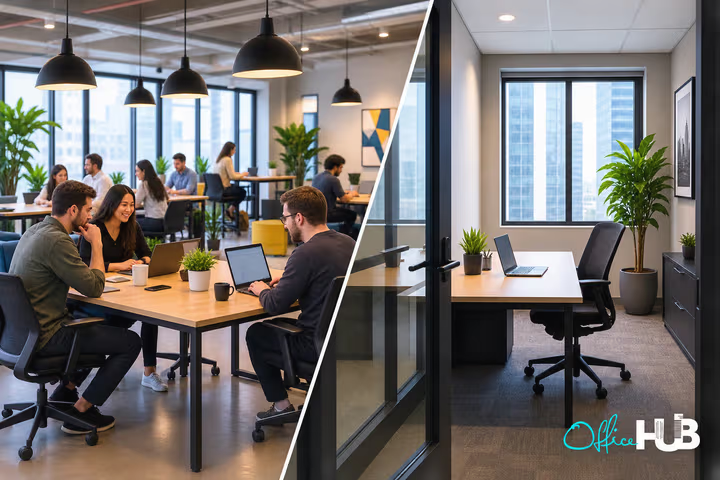
Instead of building an office around the maximum number of people who could be there, a business can choose hot desks, dedicated desks, private offices, meeting rooms, or larger team suites around the way people actually work.
For startups, that can protect cash and keep the workspace adaptable while the company grows. For hybrid teams, it can create a reliable place for collaboration, onboarding, and team days without maintaining a fully occupied headquarters five days a week.
Coworking isn't limited to freelancers sitting at communal desks. Startups, SMEs, remote employees, and large corporations all use coworking environments, with research showing different user groups choosing different combinations of private offices, services, and shared facilities.
A startup may be hiring quickly but have little certainty about what its headcount will look like in twelve months; a hybrid company, on the other hand, may already know its headcount but have no reason to maintain a permanent desk for every employee when only part of the team comes in each day.
However, both share the same underlying problem: a conventional office can force them to commit to more space, cost, and operational responsibility than they can afford or need right now.
That problem is becoming more relevant as hybrid work settles into a more structured form. JLL's 2026 global occupancy report found that 80% of surveyed organizations were operating hybrid programs (up from 77% in 2025), while 62% required a fixed number of office days. At the same time, actual office utilization averaged only 56% against a 74% target.
Coworking can close part of that gap.
Instead of building an office around the maximum number of people who could be there, a business can choose hot desks, dedicated desks, private offices, meeting rooms, or larger team suites around the way people actually work.
For startups, that can protect cash and keep the workspace adaptable while the company grows. For hybrid teams, it can create a reliable place for collaboration, onboarding, and team days without maintaining a fully occupied headquarters five days a week.
Coworking isn't limited to freelancers sitting at communal desks. Startups, SMEs, remote employees, and large corporations all use coworking environments, with research showing different user groups choosing different combinations of private offices, services, and shared facilities.
We are the US's No. 1 marketplace for serviced, coworking, and shared office space.
Connect with our local experts for flexible workspace solutions across the US. Get personalized recommendations, arrange tours, and secure the best deals — all at no cost.