News & Insights on Flexible Office Spaces in Australia
LEARNING LAB
Tenant Hub
See more tenant guides
Coworking Space Cost in Australia: A Comprehensive Guide (2026)
Coworking spaces have become a popular choice for businesses in Australia, offering numerous advantages such as flexibility, cost-efficiency, and networking opportunities. In this article, we will delve into the detailed coworking space cost breakdown of renting a coworking hot desk, explore the average costs per major city, and examine the included features that contribute to the overall value of coworking spaces in Australia.
We will also compare the benefits of coworking space cost with working from home or traditional offices, providing a comprehensive guide to help you make an informed decision for your business.

Short-Term vs. Long-Term Office Leases: Which One is Better for Your Business?
Selecting the right lease term has become a crucial element of modern business. It is not only about getting a workspace anymore; it is about shaping how your company works, grows, and reacts to change.
As the world and regional markets shift, many business centers have adopted flexible work structures. Understanding how lease terms affect your adaptability, finances, and workforce experience is more important than ever.
In today’s landscape, a lease isn’t merely a contract; it's a strategic tool. Your lease length influences:
- How quickly your business can grow
- Efficiency in daily operation
- Collaboration and styles of the culture
- The cash flow and cost control are in the long run
- Employee contentment and retention
- Continuity planning and risk management
Yet, with an expanding mix of options from short-term leases, long-term commitments, and hybrid agreements, it’s easy to feel uncertain about which model actually supports your goals.
In this guide, you will learn how short and long leases differ, the business scenarios where each one shines, the financial and operational trade-offs to consider, and a comparison checklist to help you make the right decision.
Let’s dive inRead more

How to Negotiate the Best Deal on Your Next Office Space
What if a few well-planned negotiation tips could significantly reduce your costs and give your business more flexibility?
Negotiating your next office space is more than signing a contract; it’s a strategic decision that can influence your company’s growth, operational efficiency, and financial health. Every clause, every dollar saved, and every flexible term affects how your team collaborates, estimated scalability, and daily operations.
In competitive business markets, understanding the nuances of lease negotiations is essential to turning your workspace into a true asset rather than a liability.
In this guide, we will walk you through actionable office lease negotiation tips, explore practical ways to rent an office more cheaply, and explain how to approach negotiations strategically to secure terms that align with both current needs and long-term growth.
You’ll also see how platforms like Office Hub provide market insights, comparisons, and expert guidance to help you make informed decisions with confidence. Dive in!

How to Read an Office Lease Agreement (Without Getting Lost)
Signing an office lease can feel overwhelming, especially with all the legal jargon, fine print, and different lease types. Whether you’re moving into a traditional commercial space or exploring flexible office options, understanding the terms of your agreement is critical to avoiding surprises, hidden costs, or restrictive clauses.
This guide is designed to equip tenants with the knowledge needed to navigate the office leasing landscape.
Key Topics Covered:
- Lease fundamentals and common lease structures
- Exploring flexible workspace solutions
- Crucial lease clauses tenants must be aware of
Our Goal is to Empower Tenants to:
- Review office leases carefully
- Effectively identify potential risks
- Make strategic decisions that align with their team size, budget, and future expansion requirements
So, without further ado, dive into it!Read more

The Ultimate Office Relocation Checklist
Relocating an office demands time and resources, but a well-executed plan can guarantee an efficient, stress-free move that stays within budget. Office relocation is a frequent event; according to MoveBuddha, corporate moves account for 38% of annual relocations, small businesses for 44%, the military for 16%, and government agencies for 2%.
For considering a new change, the team has two primary reasons:
- The team has expanded beyond its current capacity.
- A move to a hybrid model makes a smaller office a more sensible choice.
This guide simplifies the process:
It covers the most critical reasons for relocation, and the different types of flexible offices that meet your needs. It includes a ready-to-use checklist to help you easily relocate your office space.
Let's begin.Read more

How to Choose the Right Office Space for Your Business
Choosing the ideal office space involves balancing your team’s needs with budget, location, lease terms and company culture. Nearly 55% of global occupiers use flexible offices, with 17% planning to adopt more, and analysts predict that 30% of all office space will be “flexible” by 2030.
Considering the surge in demand, popularity, and positive reviews for flexible spaces, it’s a perfect time to secure the space that drives your growth. Your office now influences more than just where people sit. It affects:
- Productivity
- Culture
- Hiring
- Client perception
- Long-term operational costs
But with so many options, coworking, private, serviced, enterprise, and sublets, how do you figure out what your business actually needs?
This guide breaks it down simply:
You’ll learn the types of flexible offices, the six factors that matter most, get a ready-to-use checklist, and a quick quiz to help you pick the right space.
Let’s get started.Read more

A Must-Have Checklist for Entering into an Office Lease Agreement in Australia
An office lease agreement in Australia is one of the most significant decisions a business can make, especially in its competitive and ever-evolving commercial property market. Whether you're launching a startup, expanding into new regions, or upgrading your current workspace, securing the right office lease involves much more than just finding a place that looks good.
From understanding your operational needs and budget to navigating lease types, negotiating terms, and evaluating location and security, every step demands careful planning.
This comprehensive checklist is designed to help Australian business owners, entrepreneurs, and decision-makers make informed choices when entering an office lease agreement.
Whether you're eyeing a coworking hub in Brisbane, a private suite in Melbourne’s CBD, or a flexible space in regional hubs like Geelong or Parramatta, this guide covers all the must-knows to avoid costly missteps and set your business up for long-term success. Let’s get into it.

CapEx vs OpEx Explained: Which Office Space Model Fits Your Business?
When it comes to office space, businesses today face a significant decision: do you invest heavily upfront and own everything (CapEx)? Or do you pay as you go and keep things flexible (OpEx)?
It’s not just an accounting choice, but it shapes how agile your company can be, how much risk you take on, and how fast you can scale.
In this blog, we’ll delve into the debate of CapEx vs OpEx flexible offices, exploring how they apply to modern office spaces and sharing real-world examples of why these workspaces are reshaping the way companies manage costs. Ready to uncover the more innovative approach? Let’s dive in!

Guide to Designing Optimal Workspace Solutions for Tech Firms
In today's fast-paced tech world, the office is a living, breathing environment designed to spark new ideas, help companies grow quickly, and evolve with how we work now. For tech companies, this means creating spaces where getting things done and thinking creatively go hand-in-hand.
The right workspace matters for every business, whether you are a small startup just finding your feet or a larger company expanding. You must always balance focused work and teamwork in a practical, comfortable environment.
Australia is currently experiencing significant enthusiasm for developing smarter, more technologically advanced workplaces. Let's explore optimal workspace solutions for tech firms, examining their characteristics, differences from traditional spaces, and important features.

The 15 Best Office Spaces in Sydney
Office spaces in Sydney eliminate the high upfront costs and long-term leases of traditional workspaces. These office spaces are fully furnished and equipped with premium amenities, breathtaking views and 24/7 business support. Below is a list of the 15 best office spaces in Sydney for your business.
1. Tank Stream Labs at 120 Sussex Street
2. Regus at 20 Martin Place
3. Spaces at 60 Martin Place
4. Compass Offices at 207 Kent Street
5. The Executive Centre at 300 Barangaroo Avenue
6. Servcorp at 100 Mount Street, North Sydney
7. The Work Project at 66 Goulburn Street
8. JustCo at 135 King Street
9. The Great Room at 85 Castlereagh Street
10. Workspace365 (NSW) Pty Ltd at 418a Elizabeth Street
11. King Street Studios at 66 King Street
12. Work Club at 200 George Street
13. Social Me Group at 84 Pitt Street
14. Works By Scentre Group at 100 Market Street
15. Coten at 227 Elizabeth Street
Finding the right office space in Sydney can be a game-changer for your business. As Australia’s premier financial and commercial hub, Sydney offers a diverse range of flexible workspace solutions, including private offices, coworking spaces and virtual offices, catering to the diverse needs of freelancers, startups, and established enterprises.
One of the major advantages of Sydney’s office market is its scalability. Whether you need a single hot desk, a private office, or an entire floor, flexible leasing options in Sydney allow businesses to scale up or down as needed. While the market is highly competitive, finding the right workspace can dramatically enhance productivity, strengthen your brand image, and open new networking avenues.
This guide to the best office spaces in Sydney will help you find the ideal workspace for your business without exceeding your budget.

Top 15 Coworking Spaces in Sydney for Startups
Are you a startup founder, entrepreneur, small business owner, or a remote team seeking an alternative to traditional offices? Explore our list of the 15 best coworking office spaces in Sydney for startups, each offering flexibility and affordability.
1. Regus at 201 Sussex Streetx
2. The Great Room at 85 Castlereagh Street
3. The Work Project (TWP) at 50 Bridge Street
4. Servcorp at 25 Martin Place
5. Tank Stream Labs at 120 Sussex Street
6. The Executive Centre (TEC) at 1 Bligh Street
7. Christie Spaces at 3 Spring Street
8. Fishburners at 11 York Street
9. Man of Many at 69 Reservoir Street
10. Works by Scentre Group at 100 Market Street
11. King Street Studios at 66 King Street
12. GPT Space&Co at 580 George Street
13. Replus Coworking at 68 Pitt Street
14. TRC Group at 1 Castlereagh Street
15. Lockhart-Krause Architects at 9 Castlereagh Street
Finding the right office space is crucial for modern businesses and ambitious entrepreneurs looking to thrive in Sydney’s dynamic business landscape. Coworking spaces in Sydney have emerged as a game-changing solution, offering flexible, affordable, and growth-oriented environments designed for guaranteed success.
Rather than locking into costly, long-term leases or struggling with the isolation of remote work, startups can opt for flexible coworking spaces in Sydney that provide facilities, dynamic networking opportunities, and the ability to scale at their own pace.
From high-speed internet and fully equipped meeting rooms to pitch nights and access to mentors, these coworking office spaces provide everything needed to boost productivity and build lasting connections.
If you're ready to set your startup up for success, explore our curated list of the 15 best coworking office spaces in Sydney for startups in this guide!

5 Ways to Optimise Multifunctional Spaces
Multifunctional offices in Australia have experienced significant growth over the past few years. More businesses are transitioning from traditional office settings to flexible, multifunctional workspaces. Freelancers, startups, and even established companies are opting for multifunctional spaces due to their numerous advantages like premium locations, access to amenities, and flexible leases.
As work habits evolve, modern professionals have higher expectations for their office environments, resulting in a shift from the traditional concept of office spaces. Young entrepreneurs, in particular, prioritise convenience, flexibility, and environments that cater to their specific needs. As a result, conventional offices are becoming inadequate, and there is a growing demand for dynamic, multifunctional spaces.
Continue reading to discover how we can optimise our multifunctional spaces.
Host Hub
See more host guides
Handling Shared Space Operations: A Guide for Multi-Tenant Management
Managing a shared workspace is about creating an environment where every tenant feels valued, productive, and supported. When operations run smoothly, coworking and hybrid setups become vibrant communities that attract and retain clients. But when management falls short, even the most beautifully designed space can lose its appeal.
As Woody Williams wisely said, “No matter how good the team or how efficient the methodology, if we are not solving the right problem, the project fails.” In many shared spaces, the real issue isn’t the layout or amenities; it is ineffective management.
With the proper research, systems, and guidance, you can transform a plain, empty floor into an operational space with hot desks, private offices, virtual offices, and enterprise offices. This guide is designed to help operators optimize scheduling, streamline access control, proactively maintain facilities, and cultivate harmony among diverse tenants.
If you are looking to elevate your workspace operations and boost your revenue, you are in the right place. Let’s dive in.

How to Make Your Space Eco-Ready and Marketable for Tenants
Sustainability is no longer a niche trend in commercial real estate; it is a core expectation for tenants and investors alike. An eco-ready building demonstrates progressive management, operational efficiency, and a commitment to environmental responsibility, creating a compelling advantage in a competitive market.
But the question is: how exactly does making a property eco-friendly translate into tangible benefits for providers? The answer lies in a combination of cost savings, tenant retention, and enhanced market positioning, all of which contribute to your asset's long-term value.
In this guide, we will explore actionable strategies for transforming your property into a green, marketable space. You will learn how sustainable upgrades, certifications, and intelligent marketing can attract high-quality tenants, increase occupancy, and ensure your building aligns with the growing ESG expectations in the global office space market.

The Future of Flexible Workspaces: Insights for Space Providers
The flexible workspace industry stands at a critical juncture. The shift to permanent hybrid models is a foundational change driving global demand for agility. For office space providers, the next decade will not be defined by occupancy alone, but by technological integration and strategic international expansion.
This guide to flexible office spaces explores the four core pillars that will set industry leaders apart from laggards: utilizing AI-driven personalization to perfect the tenant experience, mastering the logistics of global scale, and implementing truly tech-led leasing to maximize efficiency and revenue. Office space providers who act on these insights now will define the future of flexible real estate. Let’s dive in!

The Importance of Flexible Lease Terms for Attracting Modern Tenants
The rental market has fundamentally changed. Today's tenants, driven by dynamic careers and lifestyle needs, are no longer content with the rigid, standard 12-month agreement. They demand adaptability. For you, the modern landlord, this shift is not a complication but a competitive advantage.
By offering flexible lease terms, you can dramatically reduce turnover. In fact, recent data shows that adaptable lease agreements have improved tenant retention by nearly 50% in rental properties (Silver Homes).
With that in mind, are you ready to stop losing quality renters to restrictive contracts and start building a portfolio defined by loyalty and maximized occupancy?
Let's explore the strategic benefits of adaptable leasing.
How to Price Your Office Space Competitively
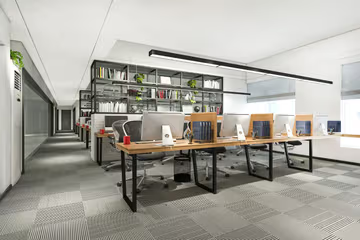
Setting a market-aligned price for your flexible office space is a critical, ongoing strategic decision. The core goal for every property provider is to maintain high occupancy and maximize net profit. Price your space too high, and you risk extended vacancies; price it too low, and you sacrifice potential revenue.
The modern office space market is defined by a decisive shift toward flexible, hybrid-first models, where tenants demand adaptability and value. This reality requires providers to move beyond static, single-rate pricing to adopt a diverse, dynamic set of pricing strategies. Successfully navigating this market requires a data-driven approach, comprehensive competitive benchmarking, and a clear understanding of how your property's value-add features justify your asking price.
In this office space pricing guide, you will discover the foundational lease structures, learn how to execute strategic market benchmarking, and explore advanced, value-driven pricing models to optimize your revenue streams. Let's dive in.

Top 5 Coworking Space Management Software Solutions
Coworking spaces have transformed the way people work, providing a flexible and collaborative environment for freelancers, startups, and remote workers. However, efficiently managing these dynamic spaces comes with its own set of challenges. This is where coworking space Management solutions step in. These innovative tools are designed to simplify operations, foster community engagement, and boost overall productivity within coworking spaces. In this article, we'll delve into the five leading solutions that are reshaping the coworking landscape: Optix, Archie, TimedOctor, OfficeRnD, and Nexudus.
Read more
Embracing the Coworking Business Model: A Recipe for Success
Coworking has become a transformative force in the business world, redefining how companies approach their workspace requirements. This blog explores the compelling reasons why businesses should adopt the coworking business model and how it can lead to enhanced productivity, innovation, and growth. We delve into the flexibility, cost-efficiency, collaboration, and networking benefits offered by coworking spaces.
A coworking business model refers to a type of business that provides a shared workspace environment for individuals, freelancers, remote workers, startups, and sometimes even larger companies. In a coworking space, people from various backgrounds and industries work alongside each other in a communal setting, sharing facilities and resources like desks, meeting rooms, internet access, and other amenities.