Coworking Space vs Traditional Office: Which is Right for Your Business?

Coworking Space vs Traditional Office: Which is Right for Your Business?

Written by: Angeline Suriaatmaja

Last Update: 26 August, 2025Read: 7 minutes
Are you confused about choosing between coworking and a traditional office? These two options have definite advantages and disadvantages, and the best solution can often be predetermined by what objectives you set, how much funding you can spend, and how your staff usually works.

Additionally, striking the right balance between stability and flexibility has today become a crucial part of the fast-evolving workplace culture.

But there’s no need to worry, our guide on coworking space vs traditional office highlights the key differences in the two, as well as compares their costs, features, and flexibility level, helping you make an informed business decision that will support your firm now and in future years.

What You’ll Learn in this Guide

In this guide, we’ll discover the following topics to help you decide which is right for your business:
  • What makes a coworking space stand out
  • What are traditional offices
  • Cost differences between a coworking space vs traditional office
  • The role of flexibility and scalability
  • Community and networking
  • Privacy, branding, and professional image
  • Productivity factors to consider
  • Lease terms and contractual differences
  • Practical tips for finding the right fit

What Makes a Coworking Space Stand Out

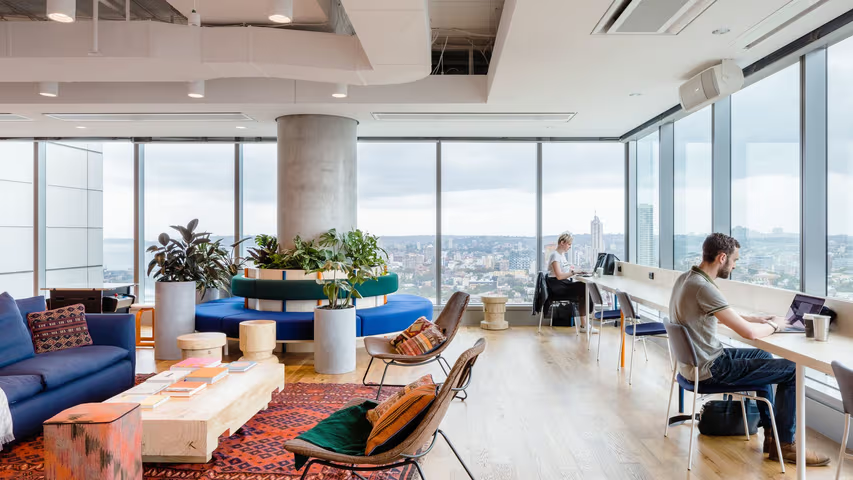
Coworking spaces are revolutionising the workplace in the UK. All of these shared spaces attract freelancers, start-ups, small businesses, and even large companies in the same space. They are not only affordable but also have a community feel, utilising convenient facilities that make daily work easy.

Standard amenities such as fast internet, conference rooms, workstations, communal lounges, and a kitchen are just a start. Most venues provide much more than space, holding networking events, skills workshops and even after-work social gatherings to allow members to interact and collaborate.

But what are coworking spaces exactly? Coworking spaces are more than just a desk for businesses. They establish lively centres where businesses flourish, share their concepts, and make valuable connections. This vibrant energy is one of the reasons why many small businesses and independent professionals are increasingly turning to coworking as an alternative to getting tied down with a long-term lease with all of its financial and logistical issues.

What are Traditional Offices

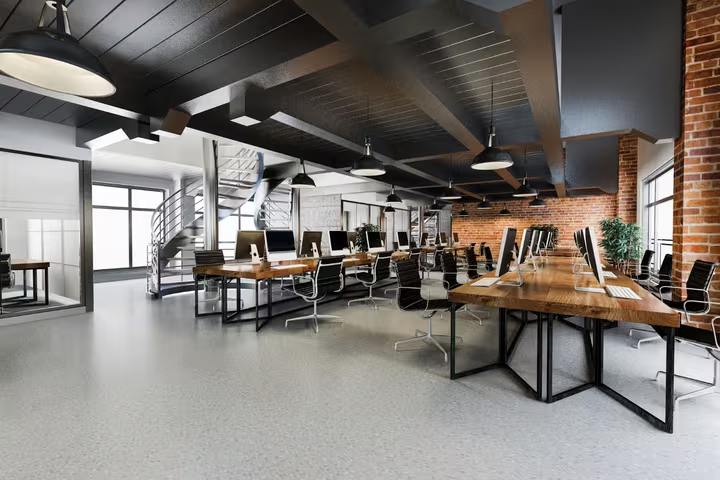
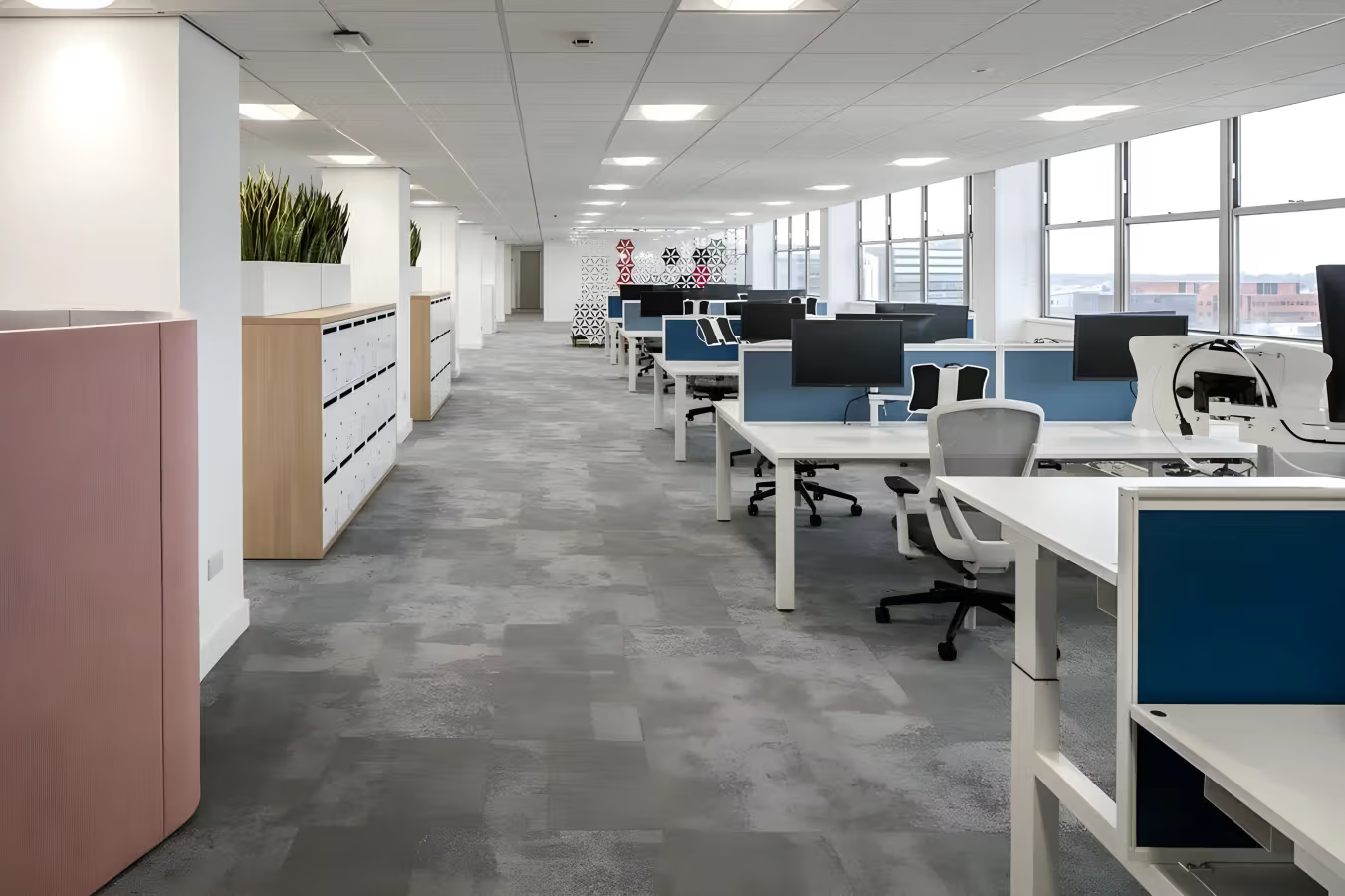
The traditional offices are an exclusive space rented or purchased by companies. Total control over your surroundings will allow you to plan the design, incorporate branding, and regulate privacy. This feeling of stability and ownership is particularly appealing to businesses seeking to establish a strong identity or provide a consistent experience for their customers.

But, with power comes responsibilities. You handle everything, including cleaning, maintenance, utilities, insurance, and furnishings, which adds to your to-do list and reduces your focus on work due to the set-up costs and logistical assistance.

Cost Differences: Coworking Space vs Traditional Office

Cost is always a significant determinant in making decisions between coworking spaces vs traditional offices. The coworking spaces are more economical in the initial cost since you only have to pay for what you use. There are no extended leaseholds, no substantial deposits and no additional bills to pay for utilities or internet. It becomes more manageable to invest in something small at the beginning, handle finances well, and then expand proportionally to the team's growth or as needed.

Traditional offices can be significantly more costly compared to other options. Monthly rent, insurance, service charges, and maintenance costs quickly add up to make a more burdensome financial commitment. Yet, the greatest advantage is that you have the opportunity to design the space and make it truly yours.

The Role of Flexibility and Scalability

Flexibility is what coworking space excels in. You can comfortably upgrade or downsize depending on your changing needs. Most coworking providers make it easy to adapt, whether you need additional desks for a new project, a bigger meeting room for a week, or a new location within the same city. Coworking spaces offer the right level of flexibility, making them well-suited for businesses that are just starting or have unknown workload peaks.

On the other hand, traditional offices lack flexibility. When you wish to change your space, it frequently implies renegotiating leases and managing relocation arrangements or visiting costly renovations. The stability that a fixed space has to offer can offer some companies a source of comfort, but for fast-growing or project-based companies, this can become an obstacle to growth or keep them tied to long, costly leases.

Need guidance about evaluating the flexibility of your selected workspace? Check this brief about workplace flexibility!

Community and Networking

Coworking spaces are highly communal, and that is one of their most attractive qualities. When you interact with professionals in different sectors, you usually acquire new collaborations and ideas that were least expected. Numerous companies see a chance to collaborate, exchange expertise or even just learn, building a community beyond the typical working day.

Traditional offices are more isolated. Your network is your team, and external collaboration opportunities are broached. This arrangement is effective for businesses with internal focus and close group dynamics, but may alienate those in industries where interaction with others is crucial.

Privacy, Branding and Professional Image

A traditional office offers a clear advantage when privacy and a professional image are top priorities for your business. You can tailor the facility to reflect your company's personality, such as through branded signage and interior personalisation. Visitors to your clients feel in an environment that is all yours, strengthening your brand and credibility.

A coworking space is well-designed and modern, but it offers limited customisation options. Shared spaces are neutral, and branding is usually restricted to your own personal desk or office, where you rent one. Nevertheless, many coworking operators invest heavily in internal design, aiming to create a professional and positive impression of their interiors during client meetings.

Alternatively, you can rent a private office within a coworking environment or a custom-managed space, which offers the same benefits as a traditional office but with more flexibility and personalised branding options.

Productivity Factors to Consider

Workplace productivity relies on the kind of surroundings that best fit you and your team. Then there are the professionals who need the energy and buzz of a coworking space that helps make them creative and motivated. The diversity of workstations, including silent booths and collaborative lounges, also allows individuals to decide what and where to do the job the best way daily.

To some, though, the hustle and bustle of a common area can be a distractor. A conventional office has a more controlled and quiet environment where teams can work without distraction. In cases where the work involves sensitive conversations or requires deep concentration, a separate office will prove to be the most appropriate.

Struggling with being productive at your workplace? Read our featured top 7 job productivity tips in a coworking space!

Lease Terms and Contractual Differences

Another benefit of a coworking space is that the contracts are uncomplicated and flexible. A lot of space can be paid on a month-to-month basis or even a daily rate without the burden of a lengthy lease. It is perfect for businesses that require flexibility or those experimenting in a new market.

Traditional offices typically have longer leases, multiple years in length. Although this approach appears more committed and less flexible, it offers stability. It can be an asset to businesses with clear long-term plans.

Suggestive read: Coworking space membership, flexible and traditional lease agreements

Practical Tips for Finding the Right Fit

To decide between coworking spaces and traditional offices:
  • Consider your business needs first: Prioritise what your business values most, whether it's flexible cost control and networking, or privacy, branding, and long-term sustainability.
  • Try before you commit: If you're unsure, rent a coworking space on a short-term basis. Many providers offer trial passes or flexible monthly memberships.
  • Visit the space in person: Experiencing the environment firsthand will help you understand how it can support your team, culture, and productivity.

Make the Choice That Works for You

Choosing between a coworking space and a traditional office is usually not easy. Both have distinct advantages and potential disadvantages, and the perfect option depends on your current state and the plans that you would like to make in the future. The most important thing is to get a space that aligns with your objectives, serves your team, and falls within your budget.

Keep in mind that your needs will mostly change as your company grows. You can start with a popular coworking space, which is more flexible and cost-effective, and then transition to an ordinary office where you can exert more control and enjoy greater stability. Being open to change also means your workspace remains a continuous drive to your success.

Find Your Perfect Workspace Today

The selection of a workspace is an essential move for your business. The most critical thing in this situation is to find the workspace solution that makes your team feel empowered and enables your growth. And our guide to coworking space vs traditional office must have helped you make an informed decision by now.

Ready to start your coworking journey? Visit Office Hub now to explore countless coworking space listings across the UK and find the best workplace range to fit your business. Get in touch with our expert to get started.

Frequently Asked Questions (FAQs)

Coworking spaces offer flexible memberships and shared inclusive facilities, proving cost-effective for freelancers and startups. Traditional offices, with long-term leases and established setups, provide control and privacy but come with higher costs, limited scalability, and separate charges for amenities. Overall, the decision should be made in accordance with your business requirements and financial possibilities.
Coworking spaces are affordable and flexible since the contracts are on a short-term basis. They offer networking opportunities with other professionals from different industries. Further, everything is fully furnished, so you can move in and start your work right away. Moreover, standard amenities, such as Wi-Fi, meeting rooms, access to communal lounges, and additional logistical assistance, are inclusive.
Coworking offices are not always private and may not provide suitable spaces to carry out sensitive conversations or confidential tasks. It may also be too loud at peak times, which affects concentration. Furthermore, customised branding options are restricted.
Yes, coworking spaces are affordable and tend to be less expensive, particularly to small businesses or freelancers. The costs range from $150 to $200 to $450 a month. Traditional offices, however, are more costly in terms of rental, maintenance and utilities and require additional/hidden charges for maintenance and cleaning.
The primary purpose of a coworking space is to enhance creativity and collaboration, which would then boost the productivity of many professionals. However, in a conventional office, the environment is restricted and has fewer distractions. Yet, renting a private flexible space is ideal as it offers the benefits of both coworking and traditional spaces.
Yes, coworking spaces offer more flexibility than traditional offices. You can scale up or down with ease as business needs change. And if you’re a project-based company, you can easily end your lease contract without paying a hefty price or staying restricted to the tenure.
Coworking places are versatile, inexpensive, and facilitate social interaction, but can be impersonal and lack privacy. In traditional offices, control, branding, and a solid environment are still available, but at a higher cost. This comes down to prioritising your budget, your business and company culture, and what you plan to grow.
A large number of companies work permanently in the coworking space. The spaces have reserved desks or personal rooms to give some stability. They also involve the presence of basic facilities, minimising operational discomforts. High-potential businesses may require more personalised arrangements.
Coworking is a natural activity of a coworking space where people share common areas and community events. Professionals can interact, exchange ideas and make alliances. Conventional offices, on the contrary, restrict communication to an in-house team. A business seeking to connect and expand its business presence will find a better option in coworking.
Coworking spaces offer unparalleled flexibility and promote a dynamic work environment, proving to be a superior choice for many modern businesses. They eliminate the high overhead and long-term commitments associated with traditional offices, allowing companies to scale up or down as needed.

Furthermore, coworking spaces often provide a vibrant community, leading to increased networking opportunities and collaboration, which are typically absent in isolated traditional office settings.
Coworking spaces benefit small businesses, freelancers, startups, and even established businesses. The setups minimise expenditure and are scalable as teams increase. The remote teams also have a professional workspace that is not highly overhead-hungry. An inclusive coworking space is especially beneficial to creative industries.
Most of the coworking spaces have an option of daily, monthly or short-term contracts, giving utmost flexibility. The traditional offices can involve extended lease agreements that span several years. This is perfect for businesses with fluctuating demands. Since the conventional leases offer complete control and stability to the operation, they can be used by the firms that seek stability.
Angeline Suriaatmaja
ABOUT THE AUTHOR
Angeline Suriaatmaja
Angeline Suriaatmaja is a high-spirited expert who ensures a smooth transition for new clients, partners, or employees. She offers invaluable guidance at every step, crafting seamless experiences that lay the foundation for long-term, thriving partnerships and success.

We are the UK's No. 1 marketplace for serviced, coworking, and shared office space.

Connect with our local experts for flexible workspace solutions across the UK. Get personalized recommendations, arrange tours, and secure the best deals — all at no cost.


Office Hub team memberOffice Hub team memberOffice Hub team memberOffice Hub team member

Talk to our Experts directly

020 3808 7222

Latest News

Explore trends, data, and tips shaping the UK’s dynamic office market

9 Best Serviced Offices in Bromley

9 Best Serviced Offices in Bromley

Daniel Lange9 July, 2026
5 Best Coworking Spaces in Leeds

5 Best Coworking Spaces in Leeds

Daniel Lange8 July, 2026
13 Best Office Spaces in Soho to Rent

13 Best Office Spaces in Soho to Rent

Soho workspaces look like the perfect choice on paper for creative businesses: a central address, strong transport links, clients nearby, an... Read more
Angeline Suriaatmaja7 July, 2026
City vs Suburban Offices in the UK: What Works Best for Growing Teams?

City vs Suburban Offices in the UK: What Works Best for Growing Teams?

Office Space in London can help you win a client meeting on Monday and make half the team question the commute by Friday. Hybrid work has ch... Read more
Angeline Suriaatmaja29 June, 2026
The Rise of Flexible Workspace in the UK: What's Driving Demand in 2026?

The Rise of Flexible Workspace in the UK: What's Driving Demand in 2026?

For UK businesses, the office decision keeps becoming harder to get right. A company may want a London base for clients, a regional hub clos... Read more
Angeline Suriaatmaja24 June, 2026
12 Best Serviced Offices in West London under £1000/desk/month

12 Best Serviced Offices in West London under £1000/desk/month

West London is becoming harder to treat as one office market and it’s no longer just the practical office space alternative to Central Londo... Read more
Rebecca Philipp24 June, 2026
14 Best Office Spaces in South London

14 Best Office Spaces in South London

Rebecca Philipp23 June, 2026
How to rent office space in London (a step-by-step guide)

How to rent office space in London (a step-by-step guide)

If you're looking to rent office space in London, it's easy to see why. The city gives businesses access to one of the strongest tal... Read more
Miles Anderson16 June, 2026
24 Best Coworking Spaces in London for Startups, Hybrid Teams and Growing Businesses

24 Best Coworking Spaces in London for Startups, Hybrid Teams and Growing Businesses

From the startups and tech firms of Shoreditch to the financial institutions of the City and global businesses in Canary Wharf, London's... Read more
Rebecca Philipp3 June, 2026
6 Best Coworking Spaces in Wales for Startups and Small Teams

6 Best Coworking Spaces in Wales for Startups and Small Teams

Finding the best coworking space in Wales is no longer just about affordability. For many startups and small teams, it’s about finding a wor... Read more
Rebecca Philipp3 June, 2026
13 Best Office Spaces for Rent in Moorgate, London and Nearby Areas

13 Best Office Spaces for Rent in Moorgate, London and Nearby Areas

Moorgate has become a practical sweet spot for businesses that want City credibility, strong transport access, and a workday that does not f... Read more
Angeline Suriaatmaja15 May, 2026
Breaking New Ground: Inventory Integrations That Change Everything

Breaking New Ground: Inventory Integrations That Change Everything

In the flexible workspace game, speed and accuracy matter. Outdated listings, incorrect availability, and manual updates don’t just slow you... Read more
Rebecca Philipp11 May, 2026
5 Best Coworking Spaces in Epsom

5 Best Coworking Spaces in Epsom

Revamp your working style and gain a competitive advantage without paying a hefty amount. But how? By leasing coworking spaces in Epsom thro... Read more
Rebecca Philipp4 March, 2026
A Guide to Managed Offices in Manchester: Premium Solutions for Every Business

A Guide to Managed Offices in Manchester: Premium Solutions for Every Business

Manchester has firmly established itself as one of the UK’s most dynamic business hubs with a strong commercial heritage, thriving innovatio... Read more
Grant Philipp29 January, 2026